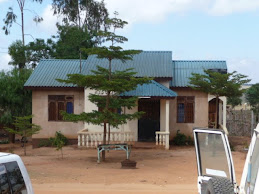
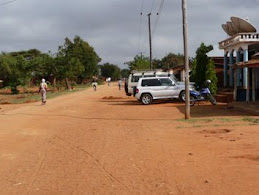
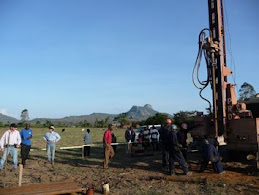
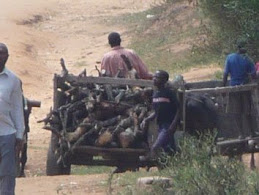
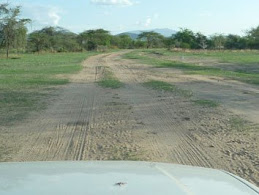
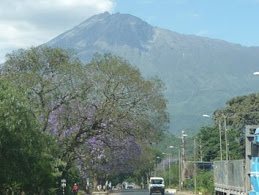
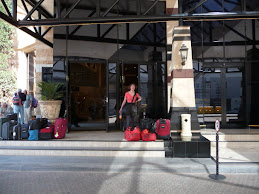
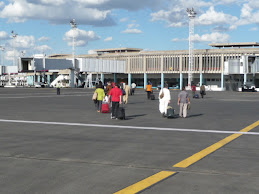
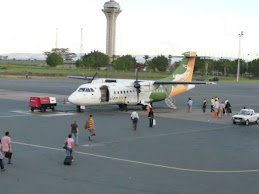
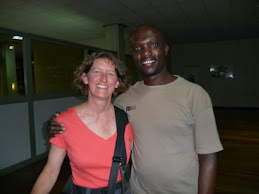
5 of us volunteers from Adra climbed into our little Pajero and headed east to the Indian ocean for a few days over New Years eve. It is meant to be a 6 hour drive, but the drive between Arusha and Moshi which is a smaller town 60 km due east took about 2 hours. There were police out in front of every little village stopping virtually every one. There are many villages between Arusha and Moshi. This is their high season and they can supplement their salaries with a lot by stopping and finding things wrong with people’s vehicles then taking unreceipted fines!. We got stopped for not having a copy of the vehicle registration on us. Then we got stopped for not having a ‘fire sticker’. Not having heard of this we ask what is a fire sticker. He points us to a guy sitting in a fire truck donated by the Japanese. Apparently every vehicle is meant to pass a ‘fire certification’ then gets a sticker to put on the windshield. Naturally they don’t have any stickers left but we still have to pay, then with his written temporary receipt, then drive into the government office in Moshi to get an official government receipt to say we had paid for this inspection. No one ever inspected the truck. The government guy in Moshi had no stickers either, he said try again late January. While in Moshi we filled up with fuel and when I opened the petrol cap a wasp flew out and stung my hand. Ouch, it swelled up a bit for three days. That was a lot of drama in 2 hours!
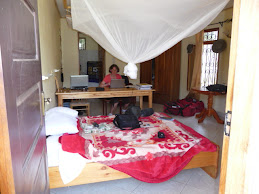
Anyway we get to Pangani with no further incident at about 3 pm after the last 42 km along a dirt road. We checked into the Tinga-Tinga lodge. It is quite basic and rustic on a cliff top overlooking the blue ocean. Very pretty. It is a lot hotter there than Arusha so we quickly head down the steps to the ocean. The water is very warm and fantastic for swimming and just floating about it. Very nice. Dinner is in an open air restaurant with seafood dishes. The full moon is shining on the water in between the palm trees. The next day was New Years eve. We drove to Pangani town itself and walked along the dilapidated water front. It used to be a popular trading center in the early days but has been neglected for about 100 years and so most of the early European style stone buildings are in various stages of decay and collapse. They still have some nostalgic charm. The town got its infamous name from the Swahili verb ‘panga’ which is to arrange. It was a slave trading town and the selling broker would call out ‘Panga Panga’ to get the slaves arranged in a line to be sold. Over the years it became Pangani. New Years eve was with about 30 guests at the lodge, all international travellers of some sort. The lodge put on a special buffet. After eating we moved just outside on to the grass on the cliff top where it was a little cooler. The evening passed quickly with talking to other people, where they came from, why they were in Tanzania. At midnight, out came the champagne for a New Years toast.
New Years day after a morning swim, the lodge manager said he would take us for a walk up the beach to a special beach where there were giant Clam fossils in the sandy cliffs. We were into this with excitement. Taking our swimming gear and water bottle we headed off north around the next bay. Tucked in behind some mangroves was this sandy beach with a 7 m sandy cliff above it. Sure enough there were many of these fossils. Millions of years old they had been calcified and were very heavy. Some almost complete shells and some broken ones. Some protruding just a little suggestively bit from the sand ,others lying exposed on the sand. With storms and high tides they get reburied and others get exposed all the time he said. These shells are about 2 ft (0.6 m) across. Ramona had her picture taken sitting in one. On the way back instead of walking back around the bay I swam across it while Ramona carried our gear. The water is so warm and inviting. The next day after a morning swim we left with fond memories of this secluded beach town.
Tuesday, January 12, 2010

Monday, January 11, 2010
Serengeti Park is Amazing
Serengeti is Maasai for Endless Plains. Tucked in behind the Ngorogoro group of extinct volcanoes, the Ngorogoro Conservation Area abuts against the eastern side of the Serengeti. From there and to a long way west are these vast grassy plains that seem to stretch forever. The difference between the Conservation area and the Serengeti is striking. In the Conservation area the Maasai shepherds are allowed to graze their herds of cows and goats. There the pastures are very short and bare in places. In the Serengeti no domestic grazing is allowed. The grassy plains are thick rich grass. The official entrance is about 20 km inside the park set in a big rock Kopje. Once past that, you drop down to the plains proper and the incredibility of 100,000’s of animals becomes very apparent. Zebras and Wildebeests grazing as far as the eye can see. From the very close that move off the gravel road as the vehicle travels by to just black specs on the far horizon. It is simply staggering to see that much wildlife before your eyes. We’d barely gone 1 km down the road towards the park center and came across a small pride of lions lying out open on the grass. They have few predators if any and so can virtually do what they like when they like. With this much food around for them they do not have to go very far. They barely blinked as we stopped to film them. We camped the first night (Christmas eve)at a public campground near the center of the park. Here there are quite a few trees and bushy with rocky out crops. The guide and cook that came with us from SOK Adventure Travel we had arranged the trip with, looked after putting up the tent and preparing food. We ate in style, huge plate of food with a bottle of wine, though it was shared with a number of large moths who liked our lanterns in the dark. It was a 5:15am start Christmas day as we were going to hot air ballooning at dawn. A driver came to pick us up in the dark (and rain now). The roads that were not gravel had turned into this black super sticky mud and our Landcruiser got stuck. We had to wait for another to come and tow us out. Once at the balloon launch site we waited for the rain to go off, but alas it never did so the balloon was cancelled for that day. They were fully booked for the next days so we thought we had lost the opportunity. Back to the camp ground and the rain stopped. Another huge plate of food and then off for a game spotting drive around the center of the park. There are roads crisscrossing about every ½-1 km so you can get close to most locations. Throughout the grassy plains are small streams with long grass and trees growing along them. This is where the predators seem to spend their time in waiting for the grazing animals to wander close. We spotted another pride of lions not far from our camp. They had killed a zebra the day before and were now standing (actually lying sprawled out)guard over it to keep the vultures from stealing their next two days food. A couple of km further on we saw a group of parked Landcruisers bumper to bumper with tourists leaning out the top, their camera’s with super lens on them pointing in the same direction to some trees. Pulling up in the cluster we spot a cheetah slinking through the long grass. Out come our cameras too. After a while of the traffic jam of too many Landcruisers around we moved further south to a region with less traffic. Another Cheetah was spotted close to our road. She was walking along parallel to the road. Taking her time and stopping every now and then to look around over her shoulder. What a magnificent cat. Unlike the solid muscled lions, the cheetah is almost a cross with a gray hound dog. They are long and sleek, with a large chest and a very small rear with a long thick tail. Purely built for speed. We watched and followed her for quite a while. For a while two jackles (like a fox) came along and joined her. They would follow her about 5 m behind. She didn’t seem to mind too much bet every few mins she would turn around and appear to tell them to get lost. They would run off about 50 m, then when she resumed her course they would come back to behind her again like little kittens. So cute. Leaving the Cheetah and off to some more rock kopjes with trees on to see if there are more cats in them. They use these big rocks as look out points over the plains. Seeing nothing there we moved east over to area where these was a small stream running along. There were quite a few trees with long grass along the depression. There were two other Landcruisers there watching something. We finally saw their target, a Leopard sneaking through the grass making a path along the stream depression. We drove further along crossed over the stream and came back on the other side where the leopard now was. We were about 50 m away from her. She crept along a distance more, then found a tree with a big broken branch sticking out of it a couple of meters above the ground. She leapt up on this near horizontal branch and sat surveying the area. She was paying no attention to any of us at all. The leopard is spotted like a cheetah but has the frame of a small female lion. This was our first leopard we had seen. Beautiful creature and a mighty hunter we are told.
Back to the camp, past the lions guarding their dead zebra, and yet another huge plate of food for a late lunch. We told Amani the cook to cook on smaller plates, he just laughed and trotted off to bring a plate of fruit for dessert. The rain had come back as a drizzle as we started off on a Christmas evening game drive. Past the lions again now with more vultures around sitting in the trees getting soaked with rain. We pass a heard of Cape Buffalo in some trees. These are one of the big five. A massive bull like animal with a dangerous set of curved horns ready to tear into you if they can get you. They are very aggressive we hear and always look at you with an angry appearance. They are impressive to see nevertheless. By now it is getting dark. Our guide and driver Emanuel gets a call from his brother who also is in the park. He is a guide for another group. His Landcruiser has broken down not far from us. We drive over and tow him back to the lodge where his clients are staying then return to our camp in the dark. Amani delivers another huge plate of food with a bottle of red this time. Emanuel with some prompting gives a good lesson in Kiswahili.
5:50 am and our alarm goes off on Boxing day. Emanuel wants us in the Landcruiser by 6 am for an early morning game drive. Back past the lions still hording their food supply from hungry eyes. We drive north stopping for a troop of baboons on the road doing their early morning grooming. Their hand actions are so human like it is fascinating to watch. Then it is on to the Hippo pool. With the recent rain the river was in flood. The hippo pool is at a right angle bend in the river, the water is quite deep and swift with a stillish area at the back of the bend. There are dozens of hippos in there. Snorting and fighting with each other. Quite a racket at times. The size of these massive animals is quite apparent at that close range. Back to the campsite, for yes you guessed it, another huge breakfast. Onto an afternoon game drive, this time down in the south of the park. On the way we got to see several groups of lion sitting in trees and watching what was going on out on the grassy plains. Though not unheard of, lions are not normally in trees. They are a bit awkward crawling around the trees. One tree had two near full grown males in it. Their heads with the mane are so big. Another had two big lioness and two ½ grown cubs all in it. We passed a small water hole with hyenas sitting in the water to cool off. They just peered at us as we pulled up to watch. Quite odd. Further south was away from the grassy plains with significantly less animals we learned after a while. We came across a group of people sitting on top of the Landcruiser drinking wine pointing at a lioness a couple of 100 m away sitting on a rock kopje eyeing them. Their Landcruiser was stuck in a 7 m wide river crossing with steep muddy banks on each side. The water was up to the bottom of the doors. They had been there 3 hours without seeing any one in sight so were glad to see us. Without a long tow rope we could not pull them out and they didn’t appear to want to get dirty to dig themselves out. We tried a piece of short rope our driver had, that only ended up getting us stuck in their too. Not good, late afternoon, no one knows where we are, two stuck Landcruisers and a lion watching it all. We had prepayed several $100 to stay in a game lodge that night and the thought of losing that luxury and having to stay in a Landcruiser in the middle of a muddy water pool was not appealing. With cutting branches with a very blunt machete and digging away the banks we got our Landcruiser out finally. We took their driver with us and dropped him off with a ranger to go back and tow them out properly. We got back to the lodge after dark and in the rain. On the way the Balloon people called our driver and said they had 2 free spots for the next morning and we could go.Another 5:30 am rise to get to the balloon site. It was overcast, no rain and with a gentle breeze to the south. Just before the balloon was ready, the basket was on its side and we were instructed to enter the basket and sit in our seats that were now on their side. Once every one was in their seat, the pilot ignited the burners and filled the balloon with hot air, the balloon picked itself up vertical and the basket rolled the right way up and we were off. The other balloons were a few minutes behind us. We would float anywhere from 10 to 300 m above the ground. There were herds of wildebeest and zebra below us with the occasional hyena skulking across the plain. The balloon burners make a bit of noise when they are on and the wildebeest being very nervous will run off quite readily. The flight was meant to be for an hour but the wind carried us south where there were fewer roads for the support vehicles to meet us, so we stayed aloft as long as we could to get closer to a road, by the time we hit the ground the butane tanks were completely empty and the balloon could travel no more. A great experience with breathtaking views. After that they took us to a nearby set of trees where they had laid out a champagne breakfast for us all. After breakfast it was back to Arusha.
Oldavai Gorge Stop Over
This is in the Ngorogoro Conservation area. This is the site where Mary and Louis Leakey made their famous early man discoveries back in the 1950s. There is a small museum with fossil and stone tool relics. You have lunch on top of the cliff under a shaded roof overlooking the gorge that drops off right below and stretches out for a km of so. A guide gives a lecture on the history of the site while you eat lunch. Their bones were 1.6 million years old. A few km away Mary discovered some human foot prints over a 25 m stretch from two adults and a child (they called 'Lucy'). These prints were 3.6 m years old, but no fossils at that site. At the Oldavai site there are excavations every year by international scholars and finds are common we were told. It may have been an old lake which is why there is so much evidence of previous habitation there.
Sunday, December 13, 2009
The Passing of Boots
This last week we got a call from our house sitters in Melbourne that our dear little cat Boots had had a stroke and couldn’t walk. The vet said there was nothing they could do for him and so we had to let him go. He was 13. We are feeling so sad. Ever since we have been married we have virtually had our cats Kimba and Boots. He was such a great little friend. He would follow us around the house or yard just to be with us and talk with us. He had a great sense of humour and loved to play. Every day when we used to come home from work in Melbourne the cats would meet us with great affection. They could brighten any day. Boots would sprawl out on the bed every night forcing us into uncomfortable contorted positions to make room for him, but we never complained, it was so nice to have him there like that. We were truly blessed to share his life and he will be missed greatly. He was our little boy.
Saturday, December 12, 2009
Lake Eyasi – A Cultural Visit
This last weekend we went on another camping trip with almost the same people we went to Lake Natron with. Alan and Andrea are due to leave Tanzania after 3 years here, so it was our last adventure with them. They go back to Aust & New Zealand. We had become good friends with them so it is sad to see them go. On this trip we did not take our little Pajero and instead rode in the Landrover of Alan and Andrea. They had said the road would be rougher than the Lake Natron road which was quite bad in places. No tarseal of course. This Lake is out west in the same direction as Natron sort of, but further west. We left Friday night after work and drove to a town called Karatu about 2 hours out of Arusha. That is the end of the sealed road. We spent the night in quite a modern camp ground. We walked to the Happy Days restaurant next door and had burgers and cold drinks out on a wooden deck. Back at the camp ground we went into the lodge bar where they were playing Country and Western music. We gave Andrea some Two-Stepping lessons.
The next morning it was west off the tarseal towards Lake Eyasi. Another 2 hr drive along well defined but crude dirt track. At often times the local kids would see the trucks coming and run to the edge of the track and call out for candy or pens (of all things). The camp round was a nice long grassy grove amongst some Acacia and other tall trees with black seed pods about the size of a tennis ball. It was on the side of the lake bed but like Natron, the lake was well down and it was about 2 km out to the water’s edge over a lifeless and very hot mud flat. It is an alkaline lake so there is very little life around there. No fish in the lake at all, hence no feeding birds either naturally. We never actually saw the water. Back at the tent sites, Alan pointed out the seed pods made good Platunc balls. We spent several hours playing a game of that. During which Bruce discovered he had a puncture in his van tyre. Bruce wanted to fix the puncture there as there are little facilities in the local Eyasi village. It took a while to get the tyre off the rim and it was hot. Warm cokes (no cold drinks available) were going down a plenty. The camp ground has a reasonable shower and toilets (holes in the ground surrounded by a bunch of sticks tied together). So a shower afterwards was welcome. Just before dusk we went up to a cliff top that gave impressive over views of the sunset over the lake and surrounding area. The sunset was a classic picturesque African rich deep orange sunset. Magnificent. We even were fortunate to see a striped Hyena slinking through the bush below. Alan had seen it on his last trip to Eyasi a year ago too he said.
The reason we went to Eyasi is that there are some isolated tribal people who live there in their old tribal ways. They are ‘off the grid’ so to say and pretty much keep to their old ways and not intermingle with the regular people. This is a very dry arid area making quite a primitive lifestyle. Too tough for us. Two tribes we wanted to see were the Hadzabe and Datoga. So on Sunday morning the local guide we had hired the day before showed up with three Hadzabe men. They were to show us where to find a Hadzabe village. The Hadzabe are hunters, not farmers. So they are always on the move after animals to hunt. They have no electricity in their villages, no water supply, no schools, no permanent houses, only basic structures made from sticks that looks like a stick igloo. If they kill a big animal like a Water Buffalo and the carcass is too heavy to bring back to the village, they just move the village to the carcass.
These three Hadzabe wanted us to take them to a special big rock where a particular plant grew. The plant they used to extract a poison from to put on the tips of their arrows. They would boil down some of the branches of this plant to make this poison for their arrows. Apparently this poison could drop a buffalo in about 30 mins. Powerful stuff. They normally took three days to walk to this rock so being driven in a landrover was a treat for them. One of them had a stiff leg whose knee no longer worked. A few years ago he had gotten into a tussle with a water buffalo they had shot with a poisoned arrow and thought was dead. However when they approached it, it turned out to be a different buffalo and was angry about being woken up so took to this guy galling his leg badly. The three Hadzabe with us were not used to vehicles so wanted to ride on the roof rack on top instead of getting inside the vehicle. Made for a good picture. We drove to this rock along the eastern side of the lake not along any road we could see. However when we got there a few Tanzanian locals came out at the sight of 6 mzungus and wanted to charge us a visiting fee. Even though we were just there to allow the Hadzabe to collect their plant clippings, they still said the mungus had to pay first. So we left, we are not into paying bribes. We drive a few more miles to the village cultural center where we could pay an official entrance fee for their area. These fees then should go to the village development rather than to someone’s pocket. But the office was unmanned and no one could find anyone to come and open it. So we left there too.
On to a Hadzabe village. It was a small village of only about 20 people, 4-5 families. ½ dozen young kids and some teenagers with parents. Dressed in loose skins. They let us shoot their bows for a while. They could hit a 6” target at about 25 m no problem at all. After 3 goes I actually hit the target. However I could only pull the bows back about ½ what they did and they were all shorter than me. So my arrow would have had no penetrating power. Some of the people with us bought a bow and a set of arrows as souvenirs.
After that we went to a Datoga village. These people are quite different. More sophisticated than the Hadzabe. They wear nicely tailored clothes from skins. Their houses are permanent mud brick houses. They perform a small amount of industry with the smeltering of metals to make arrow heads, that they sell to the Hadzabe, or make bracelets or other jewellery that the women then sell to tourists like us we presume. They had a crude set of bellows made to make their fires hot enough to melt brass (old padlocks) and bronze or soften steel. They managed to sell a few arrow heads and bracelets to our group. They grew some crops and showed Ramona and Andrea how to grind the maize into a powder. Very nice and friendly people.
The next day as we were packing up to return to Arusha, a couple who had been in the camp ground too, came and asked us for a ride back to town if we had room. They were on their honeymoon travelling around Northern Tanzania. He was Scottish and she was German. An interesting couple. Patrick worked for the Red Cross and had just finished 5 years in Afghanistan. He had some good tales to tell. We met up with them two nights later to go to dinner in Arusha to hear more of their work and travels. Their next assignment was in Chad. A different career path to most people.
Sunday, September 27, 2009
Lake Natron; A Place of Wonders
This last weekend we went on a 4 day camping trip with other VSA volunteers, a German girl and a Danish guy. 9 of us all up. 3 people had been to this place before which was just as well as it is not obvious at all. The place is called Lake Natron in the NW of Tanzania. Not far from Ngorogoro Crater which is the big famous national park. To get to Natron however is 100 km (60 m) off the tarmac road. It took 5 hours to drive that distance. Corrugated gravel road that shakes you to bits, that then turns into a gravel dirt road, then a dirt road dropping down through dry river beds, or crossing high planes. Fun driving but our poor little truck gets a rough time on these roads. It managed them really well overall. There were 3 other vehicles as well so we travelled in sort of a convoy. Bruce has a 4WD high ace van he has fitted out for Africa and so includes a large tool box just as well. About ¼ of the way in the rubber bushing on the top of his front right shock disintegrated allowing the shock to bang around. He dives into his tool box comes out with a set of tools and an old piece of car tyre and makes a new bushing. This lasted about another 1 hour then the metal shims that hold the rubber bushing on became pounded out and they and the rubber came off again. Bruce makes a new rubber and I find a 3/8” washer at the bottom of his box. This is quite a bit thicker than the metal shims so he puts that on and it holds the rest of the weekend just fine.
Then a bit more on Alan and Andrea get a puncture in their Landrover. Now we are hours from anywhere, no chance of getting any repair of the tyre. We put the spare on and Alan says at the end up by the lake there is a tiny village maybe we can get another tube there. So off we go again fingers crossed.
At one point we drive through the crater highlands. This is a high grassy plane, with mountains on both sides, except that now it is so dry that there is only stalks left. But there are these small craters from old volcanoes all over the place. Very cool scenery, hostile to life but beautiful to admire. This is also the heart of Maasai country. The Maasai are cattle and goat herders. They wander around the planes and mountains with their herds looking for food for them. They live in Boma’s which is like a collection of ½ dozen igloos made of mud. In this area there is extremely little water. The Maasai have learned to live without much water, they drink things like animal blood. As we drove along the road, some that were close to the road and seeing 4 vehicles drive along, would come running down to the road begging for any water. Money was not important to them like it is in Arusha or more normal places. They just wanted water. Quite a shock to the mind to see and learn this. The Maasai dress in the most beautiful colours. The men are wrapped in a tartan like red/black cloth and they all carry a spear or stick. The women are similar but wear all this ornate jewellery. Large earrings, multiple in each ear, intricate neck pieces. Very stunning to look at them. They have their own language too so we could not understand anything they said only when they indicted drinking something.
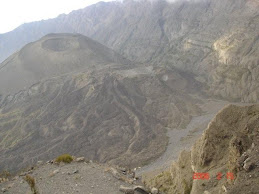
Also at this Lake Natron is Ol Doinyo Lengai Volcano. This is Maasai for Mountain of God. As we drove north we saw the mountain come into view. It is a very symmetric steep mountain all by itself about a mile from any other mountains. We had to drive past it to get to the lake and the camp ground. It is still an active volcano, last erupted in 2006 with a large amount of rocks and ash and sand. (No Lava). You could see from its slopes there were no trees or plants, just rock sheets and rocks and sand gullies that water had flowed down in. It is quite pretty really in an odd way.
We got to camp just at dusk and set up the tents, and found they had a swimming pool albeit a little green and they served cold beer and sodas. We were set.
They next day we spent a lot in the pool as the heat was impressive once out of the shade. Ramona walked off the grassy area that was the campground boundary out on to the edge of the lake bed (when the lake used to be that high, all just sand now) and wow was it hot out there. Back to the pool. There is a little town a km down the road that we were told may have a spare tube for Alan. The camp owner asked us while we were in town if we could bring his supplies back as he had just seen the bus go buy and he didn’t want them to sit around for too long. There would be a guide there too we could talk to he said about climbing the mountain. So off we went. Found a tube at an exorbitant price, but the vendor had us over a barrel. We bought that and went to find the guide and a cold coke in a little wooden shack. This was a Maasai town, about a dozen wooden buildings. The clothing was impressive all over, some women in the bright red with jewellery, some in black from a different tribe with different jewellery. Bruce bought a great Maasai spear for $15. There is no phones here, no TV, no news paper. This was their world and that was all they knew. But very friendly people. They were selling all sorts of trinkets and jewellery very cheap. We arranged for the guide to meet us at 11 pm that night. They days are too hot, especially climbing on black rocks and sand, to climb during the day. So we were to do a night climb.
At about 5 pm we drove around to the lake bottom to a point where we could access the lake to see the Flamingos. The lake is low so there was about ½ mile of dry sandy mud to walk from the car stop point to the water’s edge. It is an alkaline lake too, so nothing grows, quite a stark arid area. Then there are these beautiful pink delicate big Flamingos by the 1000. Everywhere. A group here another over there etc. The horizon on the lake was just a pink band. Some were landing, some were taking off, others feeding or talking. The contrast of the aridness to the colourful birds was just so impressive.
We tied to get an hours sleep after dinner that night but not too successful. Got up at 11 and drove to the camp gate where the guide or actually the guide’s substitute was waiting for us. He said in broken English he was the guide’s brother and his brother was sick. Not good, the original guide was very experienced and spoke quite good English. Alan was saying this was a set up, to take our money and not do the climb. We talked with him some more and noted he had bought some climbing sticks with him for us to use which we took as a good sign, so we decided to take the risk. It was about 30 mins drive to the base of the mtn. Along the way we chatted some more to him in broken English and got to feel better about the situation as he seemed to know what he was talking about. He had bought a 2nd guy to stand security on the Landrover while we were climbing. We started climbing at midnight. It was a starry night, clear with a cool breeze blowing which made it a great night for a climb. We were walking on sandy trails or sandy rivulets in between sheets of rock from previous eruptions. The higher we got the more steep it became. The sand made climbing tiresome slipping backwards all the time. At 3:30 Ramona and Alan said they would stop there as it was getting more and more difficult to make progress. They nestled down behind a big rock out of the wind and waited for us to return. The guide made sure they understood to not move away from this area. He said it was too dangerous to attempt to walk down in the dark; we had to descend in daylight. Alan is quite an experienced climber which made me feel better about them stopping there by themselves. That left myself, Yong and the guide to go further on. At about 4:30 the going was steeper still and the sand and rough rock plates were making harder and harder to get a footing on. Yong said he was so tired that he just wanted to go to sleep, so he said he would stop there. It was still another 2.5 hours to the top the guide said. Poor Yong however was on a steep part and could find no flat space too lie down, so he sat down and propped himself up with his walking stick so he wouldn’t fall over when he fell asleep.
There were two other groups on the mtn too. They had started after us and had passed us earlier on so we could see their lights up the mtn. The guide and I carried on, we passed one group, then the second group as they had stopped for a rest. Once they started again they soon passed us. A fit Canadian couple with a guide. As we neared what looked to be the top rim there was a little bit of damp soil like stuff around and it made climbing on the rocks slippery. It was steep enough now that often I was climbing on all 4s to grab rocks and lift my feet up trying not to slip. Still a lot of soft sand in the gullies between the rock plates. By now I was rather tired. The sun had just come up so the head lamps could be turned off. Approaching the rim I could now see these two great rock structures like a gate way with a gap between them. We were heading for the gap. That must be the top I thought. However as we got within a 100 meters, I could see there was yet another ½ mile (1 km) more of rock and sand to go up beyond this gap. My heart sank; the 7 hours of exertion were taking their toll. That would take at least another hour or more. The guide was 10 m in front and once through the gap he turned left and disappeared from sight. I got to the gap a few minutes later and turned left too, to find a gentle ridge going up about 70 meters to where it turned to the right into the top ridge around the crater and that was quite flat. My joy soared we didn’t have to climb that ½ mile of sloping rock after all. It was now very easy walking on the rim. I could finally get the camera out and take some pictures. The top was a series of depressions and the main crater with a thin rim between them all. One side of the rim would fall down the mtn, the other side of the rim would fall into the crater or one of these other depressions. The rim was about 4 ft wide so it was quite safe and easy to walk along. The crater was about 1 km wide. On the inside the rim sloped steeply down for about 100 m then a sudden 100 m deep drop off down to the bottom of the crater. You could see steam, smell a bit of sulphur, and see rock that had cooled from lava extrusions. Pretty cool stuff.
The outside of the rim fell away steeply on all sides. With the sun just up and low on the horizon, the whole mtn cast a perfect symmetric shadow on the big escarpment cliff about a mile away. That made for a nice picture.
Then came the going down, not something I was looking forwards to. The Canadians had left to go down about 15 mins before us. The third group was still coming up. The rock plates were too slippery to walk on top of let alone try to step down on them, so it meant walking in the sand gullies between the rock plates. These gullies or rivulets were from 1 – 4 ft deep and 1- 4 ft wide. The sand was not slippery like the rocks but you could easily slide down with all the sand around your boot sliding down to. So the process was to take the walking stick, stick it in the sand or a crevice about 2 ft in front, then step down to the stick with one foot, if that held, then step down with the other foot while hanging on to a rock edge on the edge of the rock plate with the remaining hand. Then repeat over again. A slow but steady process. I knocked a few rocks loose and we had to yell out to the Canadians about 100 yds in front of us below to ‘Look Out’ as that can be very dangerous. Once going, those rolling & bouncing rocks do not stop for ages. The further down the less step it got and easier to walk.
It took about 4 hours to go down, picking up Yong then Ramona and Alan along the way. By then it was near 11 am and the heat was in full force. Needless to say the afternoon was spent in the pool in the shade with cold cokes and beers.
It took 4-1/2 hrs to drive out again the next day, passing Zebra, Ostrich, Jackals’, etc. This time we had filled up all our empty water bottles and handed them out to the Maasai people who came up to the road as we drove along. Some were so excited to get water.
About ½ way out, there was an ancient stone ruins site off the way so we went to that for a short diversion. About 500 yrs old, it was occupied by some people pre Maasai. People called Songo they thought, whose relatives now live way up north of Lake Natron. Not a lot of details known as there was no written language amongst those people pre-European.
Lions in Ruaha National Park
After installing the last pump, we took a couple of days off to go further south to Iringa and to visit another big game park called Ruaha. The drive is through the Mikumi national park to Iringa and is on tarmac. Iringa town itself is off the main road about 2 km up on top of a cliff. The main street runs along parallel to the cliff top. We chatted to a guiding company about whether to use them to get to the park or whether to drive there our selves in our Pajero. We had heard the road was not so good from Iringa to the park. After considering the options we choose to book a night at a lodge just outside the park entrance and rent their guide and vehicle from there. That meant us driving the 60 km to the lodge. It was mostly flat but corrugated and rough. It took 3 hours to get there. We got there at dusk. The lodge was way up on the side of a hill with great views of the planes and trees below. At that time of year though, it was very very dry. No greenery to see, most things including trees are covered in dust. No chance of seeing any animals in the trees below as there is nothing for them to eat there.
The Lodge included a fixed evening meal that we shared with a group of Germans who had come too. They had a great wooden log balcony to sit on with a cold drink and look out over the tree covered land below and low mountains in the distant inside the park. I must have eaten something bad in Iringa as my stomach was quite upset and could not face a meal. Ramona was fine thankfully. I later lost what little was in my stomach too.
In the morning I saw the Land Cruiser out front ready to go. They guy was letting it roll down hill to jump start it. Hmm I thought. It was 30 km to the park entrance on the same road as yesterday. The Land Cruiser had a lift up top on it so customers can stand up in it and view game. While driving around though the top is normally down. Most of the rubber seals had worn out and it rattled so loud we really couldn’t talk. Once in the park we stopped at a bridge over a river to watch alligators, some hippos, some baboons leaping over rocks and little water ways, so cute. Not long after the bridge the driver stops and gets out of the vehicle, something had broken. We look under the rear and see the sway bar lying on the ground. Two mounts that are meant to hold it up had come undone, the bolts fallen out and lost. He ties it up with a bit of rubber tubing which looked dubious. On we go for about another 15 mins and the same thing happens. He ties it up again and adds a bit of thin wire this time. Then he drives to the head quarters a couple of miles further up the road and into their maintenance compound. He asks one of the mechanics there if they can fix it. About 1 hour later they have it repaired and we have to push start the vehicle again. So at a little after noon we finally begin our game drive proper. A little irritated by now. But the driver knows his stuff and we soon come across Jackals, umpteen Zebra, Giraffe, Warthogs, Impala, and then Ramona says this looks like a good spot for lions. Sure enough we see a lion under a tree, then another and another. 9 all told sitting there in the shade on a raised river bank overlooking the near dry river and the impala out there. We park about 20 ft ( 7 m) from and just below them in the river bed and watch them for ages. They could care less about us, sleeping and watch the impala was the order of the moment it seemed. Eventually one got up and walked down the bank and started to walk out to the river bed behind us intently staring at an impala. Then another and a 3rd. They were fanned out. A 4th one who had been on our front right got up and started to walk past us to join the others. I had been videoing her but as walked towards us she filled the lens. I was backing off the zoom to keep her in the lens then realised there was no more backing off to do as she was just off to the side of the truck walking past us. Ramona was so excited to see this massive cat just right there walking past us. The lion joined the others now in a spread out pattern that looked like a military plan. They sat there so still and just watched that impala. Magnificent, such patience and stealth.
We drove off to leave them in peace. Stopped for lunch well away from the lions. Some others were there and said they had seen a cheetah not far away. So off we went in search of that. The driver found her quite soon stretched out on the ground under a big Baobab tree in the shade. Compared to the big muscled lions, the cheetah is very thin and wiry, built for speed. A movement under the tree caught our eye and out walked a little cub then another. So cute! They walk up to their mama then start playing with each other for a bit. They are very thin too. The mother spots an impala about 200 m away and gets up slowly and she too stealthily walks towards the impala. Seems like Impala was on the menu that day. The cubs follow off too after their mama. She disappears low in the brown grass and we loose sight of her and the cubs. But what a treat to see nature in action.
We head back as it is getting late. Along the way we come across a group of elephants, then a big group of water buffalo under some trees in the shade. Out of the park and almost back at the lodge we get a puncture. The driver rummages around and comes out with a little bottle jack and wrench. We take the flat type off and can’t put the new one on as the jack won’t lift the axel up high enough. I tell the driver we’ll have to dig down to make a depression in the road to put the tyre in low enough to get in on the studs. We do this and get the wheel on. But the truck engine has stopped and now the truck has one wheel in a hole so we can’t push it out with just the three of us. Fortunately just then a van comes driving by and he pushes the land cruiser to get it started and we get back to the lodge at about 4 pm. We say good bye to the staff there, told them their vehicle needs some good maintenance and jump in our Pajero and start the 3 hr drive back to Iringa, knowing that the last hour will be in darkness. Not recommended. But it all went ok.
The next day we went to the Isimila Stone Age site not far from Iringa. This is the site of some very old discoveries of some of the earliest humans. 2nd to the Olduvai gorge only where the Leakeys found their famous finds in the late 50’s. So quite an important site. Not that you would know by the way it was presented. A small confusing sign on the side of the road, then a windy track through some back yards of mud houses down to an over look site that at least did have some respectable buildings on it. There was no one around so we walked down the part to the bottom of the gorge even though it said not too. Once at the bottom, a guide saw us from the top and came running down to show us around. Basically a very dry sand and stony river bed with some old excavators huts on it. The area had not been excavated since the 50’s too. The guide took us on an excursion over to another nearby canyon that we could not see at all from up top. It had some spectacular rock towers in it about 10 m high, we were able to walk right in down amongst them. Fascinating to see structures like this.
After Isimila we headed back to Mikumi. The hills along the Iringa to Mikumi gorge are quite steep with a river at the bottom most of the way. Being steep they have not been grazed or cultivated hence they are still covered in bush. In addition to the usual wrecked trucks along the road, from punctures, to broken axels, to being tipped over, there were forest fires everywhere, not large ones, but smoke and flames were quite common. Some along the road side as the picture shows. This was a first for us to drive past fires like this. There were no fire men or anyone in attendance at any of these fires. They just burn themselves out eventually we concluded. Tanzania continues to be an adventure. Then it was back to Gairo.
Wednesday, September 23, 2009
From 4 hours to 5 Minutes
The day we left Gairo Musa from the VSA office in Arusha came down to see our work and to collect some items VSA had provided for the house we had been staying in. We took him on a tour of 15 wells. Musa was able to talk to the local villagers very well. One woman came up to talk to him as she could not talk to us with our limited Swahili. She was telling him how thankful they were to get this water. This particular village had no other water source and they had to walk many kms or 4 or so hours sometimes to get 20 liters of water. Now they have water a 5 min walk from their house. It is not an unlimited amount of water and they have to pump somewhat hard to lift water from that depth, but at least it is some water for them. That is what we came for.
Subscribe to:
Posts (Atom)