Last Sunday ended up quite a bit different to what we thought it would on Sunday morning. We went up to the neighbouring Danish run training center for a game of squash. Max had come back from the States full of enthusiasm to play some sports. The options are limited here so he bought back a volleyball/badminton set along with tennis balls, squash balls and ping pong balls. So he was itching to get some game going. We had a short warm up and he was ready to start a game. He was quite aggressive and has a good eye for the ball. He was up, then I got up a bit then he started to come back. He hit a ball that bounced back deep into the left back corner. I ran over flicked the ball back with a reaching out backhand and then to stop quickly and get back to the center of the court, I pushed off the wall with my left arm. Oh no, that felt weird and what’s worse it still feels weird. I realised with sinking diamay, my left shoulder was dislocated. We tried with Ramona or Max to lift it back into position but no such luck. Max dashed back to the Adra office to get his Landcruiser as would have to drive somewhere to get attention. Ramona called some other volunteers to ask if they knew of any adequate medical places we could go. There are some local village clinics, but after having seen the Gairo one, I said no lets go into Arusha even though it is a 30 min drive as they will have better qualified people. The bad thing about that drive is the large number of speed bumps and judder bars along that road. Not what a sore shoulder needs.
One of the ex-volunteers is a nurse at the Arusha hospital now. Luckily Ramona had her number so we called her while driving and she then called the doctor on duty to let him know we would be there shortly. Turns out he is an orthopaedic of all things, lucky for me as I was then envisaging a 6 hour drive along a rough road to Nairobi in Kenya. After not too long of a wait and being shuffled around 3 different rooms the doctor came in and took me to a small theatre for a general sedation while he put the shoulder back in place. I woke up all bandaged up but no longer in pain thank goodness.
So now it is two weeks in a sling then light duties for quite a while and physiotherapy though I can’t see that being too effective here. It means it will further delay our return to Gairo to finish installing the pumps for those poor drought stricken villagers. TIA
So between Ramona I we have now dislocated 2 joints in 7 months while in Tanzania. The irony is it is not to do with work but playing sport in our free time.
Friday, July 31, 2009

To Protect and Serve
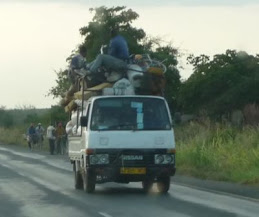
In Mid July we were asked to accompany another manager to Gairo to access the progress of the projects Latrine construction and Rain Water collection sub-projects. While there we wanted to go and visit the supplier of the pumps we have been waiting on for months. The three of us drove down in our 4WD. It takes 10 hours. Along the way you drive through various villages along the road side. A good part of the way is a very dry area and the villagers must be very poor. The houses are mainly single room mud brick with thatch roofs. Very few crops or animals in sight. Every time you pass through a village the local police are out standing on the road. They don’t have any vehicles so they can’t go far from their office (shack). They stand out on the road and flag down almost every truck and bus and some cars. They stop them to check registration papers, insurance papers and anything else they can think off to find an infringement and get a bribe to let the driver go. This happens in almost every village. It must take the trucks hours and hours of extra time to make a trip with all the stopping they get every 20-30 km. In between the villages you can drive as fast and as bad as you like..Since the police have no cars they can’t go out to patrol the roads. They do not appear to be too interested in road rule infractions, just stopping trucks and cars to get a bribe. Even on the road from Usa River, where we are based, into Arusha, any police from a western country would have a field day. The driving is so bad and dangerous. The amount of traffic tickets they could give out and earn revenue for the government would have to be very large. But none of it gets caught. There are drivers passing on blind corners, coming over hills, some pass on the left, some just pull out into the opposing land and flash their lights at the then oncoming cars to try to get them to pull off the road to be let by. At some times the traffic going one way is 4 wide when the road is 1 lane each way. Not often thank fully though.
Anyway back to the Gairo trip. We got stopped three times on the way down. Check registration, check insurance, check to see if we have a fire extinguisher... We did get one speeding ticket and we were going over the posted limit. The car behind us was going faster and they tried to wave them down to but he just kept on driving. With no police vehicle they have no way to catch them. The guy behind that got pulled over too but he left in just a few minutes, where as it took about 30 mins for them to write out a ticket in triplicate to us. I asked the ADRA guy with us how come that driver got to leave so quickly. He said he saw him slip a note out the window.
There are some entrepreneurial teenagers trying to sell ears of maize along the side of the road at one place. They just may not last long at the job however. They stand out in the middle of the road waving ears of maize as you drive up at highway speed then at the very last minute step aside.
We have the Pumps!
We spent two days at Gairo making notes on the project. We also visited the pump supplier for the pumps we had been waiting on since April. After a few hours of drama we finally got the situation worked out and took the pumps back to the ADRA office in Gairo.
We had taken 3 soccer balls down to Gairo to give to the kids down there we had become friends with then back earlier this year. They were so excited to get a gift from the mzungus. They raced off to show their mum and other family members. (No fathers around) It was good to see them happy as they have such a little.
On the way back to Arusha from Gairo we got stopped another 3 times. Registration papers, insurance, ... We came across yet another two dead trucks i.e. trucks and trailers lying on the side of the road after rolling over.
We’ll be going back down to Gairo in a few weeks to finish the installation of the pumps which will be good to see the villagers get what they have been waiting for.
Back at Usa River in the meantime we have been working on writing a manual for the use of QuickBooks that ADRA is going to implement to its accounts staff in the next few weeks. We listed all the common functions the staff will need to do and have written detailed instructions on how to perform those steps. We think they will be so excited to use such a modern program after being with a DOS based program and manual documents for so long. It will be about a 40 page manual by the time we have finished. Max arrived back from his trip to the United States and bought back 3 new notebooks for the accounts staff to use. The internal battery of the notebooks will prevent them from losing their work when the power gets shut off with no notice which is a frequent occurrence. We had some network cabling installed in the accounts office to set up a little network for them so they can communicate to each other through the computers and share the various accounts files. These are all big steps for the staff to take and we know we will have to take a lot of time to explain all this new setup they are being introduced to.
The female dog on the ADRA campus had 7 puppies 8 weeks ago. They have just now learned they can run around and chase each other. They are little balls of fluff. Their faces are so cute with their big puppy eyes. We built a moveable mesh pen for them so they can stay outside during the day to get fresh air. They just love it. They yap and stand up with their little paws against the mesh whenever we walk by.
Anyway back to the Gairo trip. We got stopped three times on the way down. Check registration, check insurance, check to see if we have a fire extinguisher... We did get one speeding ticket and we were going over the posted limit. The car behind us was going faster and they tried to wave them down to but he just kept on driving. With no police vehicle they have no way to catch them. The guy behind that got pulled over too but he left in just a few minutes, where as it took about 30 mins for them to write out a ticket in triplicate to us. I asked the ADRA guy with us how come that driver got to leave so quickly. He said he saw him slip a note out the window.
There are some entrepreneurial teenagers trying to sell ears of maize along the side of the road at one place. They just may not last long at the job however. They stand out in the middle of the road waving ears of maize as you drive up at highway speed then at the very last minute step aside.
We have the Pumps!
We spent two days at Gairo making notes on the project. We also visited the pump supplier for the pumps we had been waiting on since April. After a few hours of drama we finally got the situation worked out and took the pumps back to the ADRA office in Gairo.
We had taken 3 soccer balls down to Gairo to give to the kids down there we had become friends with then back earlier this year. They were so excited to get a gift from the mzungus. They raced off to show their mum and other family members. (No fathers around) It was good to see them happy as they have such a little.
On the way back to Arusha from Gairo we got stopped another 3 times. Registration papers, insurance, ... We came across yet another two dead trucks i.e. trucks and trailers lying on the side of the road after rolling over.
We’ll be going back down to Gairo in a few weeks to finish the installation of the pumps which will be good to see the villagers get what they have been waiting for.
Back at Usa River in the meantime we have been working on writing a manual for the use of QuickBooks that ADRA is going to implement to its accounts staff in the next few weeks. We listed all the common functions the staff will need to do and have written detailed instructions on how to perform those steps. We think they will be so excited to use such a modern program after being with a DOS based program and manual documents for so long. It will be about a 40 page manual by the time we have finished. Max arrived back from his trip to the United States and bought back 3 new notebooks for the accounts staff to use. The internal battery of the notebooks will prevent them from losing their work when the power gets shut off with no notice which is a frequent occurrence. We had some network cabling installed in the accounts office to set up a little network for them so they can communicate to each other through the computers and share the various accounts files. These are all big steps for the staff to take and we know we will have to take a lot of time to explain all this new setup they are being introduced to.
The female dog on the ADRA campus had 7 puppies 8 weeks ago. They have just now learned they can run around and chase each other. They are little balls of fluff. Their faces are so cute with their big puppy eyes. We built a moveable mesh pen for them so they can stay outside during the day to get fresh air. They just love it. They yap and stand up with their little paws against the mesh whenever we walk by.
Tuesday, June 30, 2009
Where are the Pumps?
We still do not have the pumps to go finish off in Gairo. First there was to be a 6 week delay from the supplier in Morogoro while they imported them. Then when the pumps came in they said the VAT exemption we had obtained was invalid. They were the ones who told us how to get the exemption back in February. (It takes 6-8 weeks to get an exemption through the government offices). We were told by the sales manager, the owner was overseas. We told the sales manager the exemption was valid but he refused to acknowledge it. We went back to the tax office to check and they confirmed ‘yes it was valid’. Then when the project coordinator (pc) in Gairo went back to the supplier’s office again, there was a policeman outside saying he had locked the business as the business had back taxes owing. The pc did some digging around and found the business in another location in Morogoro, but there were no signs up or anything to say they were there. And the business owner was not overseas after all! They said they had tried to call the PC but could not get a hold of him?? They have his numbers, all our email addresses so that seems quite strange. So here we are after 12 weeks and we have no pumps, we do not know if we will get them from this supplier at all and the money is just stolen of if we do get them, when is unknown. Every day is a different storey by the time the word gets from Morogoro to Arusha. Very inefficient. TIA. I’ve started dealing with the manufacturer direct in Holland and we can get them from them if need be at lower cost but still another 6 weeks shipping time.
We started planning a procedure to use Quickbooks for the new accounting system for the organisation at their Usa River headquarters. Ramona knows other similar programs quite well so she seems to be able to find her way around the software easily. The time consuming part will be to work out the opening balances on the various accounts and enter them into Quickbooks before they change again.
The baby home was given for kitset incubators to use for premature babies. They needed to be first put together so we volunteered to do that. Once the wooden sides were assembled, we wired in the electrical heating system. Then they were varnished. Finally the clear perspex covers and tops were added.
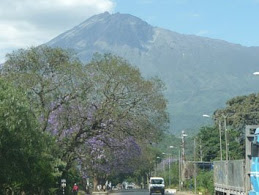
The 24th June was Ramona’s birthday. We try to spend her birthday on a mountain or a big hill somewhere every year. Since Mt Meru (4562 m) is just a couple of miles away and it is quite the big mountain, we set out to drive up to the base a bit and spend a few hours hiking up there. Marsha came with us too as she had been to that spot before and sort of knew where to go. It is not a well known path and not a tourist trail by any means. We think it is more a path the local farmers use to move up and down the mountain. The lower slopes have very fertile soil and a lot of small area crops are grown, all tilled by hand with a hoe. Once on the trails off the main tarmac road it is a winding, dirt trail up the lower slopes. We were often in quite thick bush so easy to get disorientated very quickly. Very few vehicles drive up that far we concluded There are no maps, no signs, no nothing to tell you where you are. . All you know is up and down the mountain. We got so lost up there! We ended up driving a long way in the wrong direction along this path, narrow at places, with water and mud filled ruts, half buried big rocks, a bridge made of planks thrown on some other planks to cross a small stream. Bit worried about that one. So after a while we turned back, Ramona and Marsha had to re-lay some of the planks as they had shifted from the first crossing. We followed a new trail downhill and came back on to the main tarmac road again after about ½ an hour and found ourselves about 10 miles away from where we had first started. So OK, now that we knew a little about the lay of the land, we drove back to the start point and looked for a turn me must have missed to take us up the mountain and not along it. We found it very early on and up we went. This time we picked up a local girl along the way, hoping she would tell us the right way to go. She almost did, as she thought we were giving her a ride home and we missed the last turn off again. Another local pointed it out to us, (no English spoken up there). So we parked and hiked up for an hour as by then it was getting late. Had late lunch up there and then returned. Driving down was meant to be easy as there was only one right turn we thought. But not to be, we got lost again! So for the second time that day there we were driving down a dirt tail not knowing where we were, the locals looking at us probably wondering what the mzungus were doing there again. This time we came out about 3 miles away from where we started off the tarmac road.
Last Saturday, we went into Arusha to watch, on a big screen, the All Blacks play France again in NZ. There was one French guy and 6 of us in the bar, so good for barracking against the French. Just after that game finished we heard the Wallabies were to play Italy in a test match in Melbourne. We changed bars to a restaurant and had lunch and watched that game. Then not long after that game finished, the Springboks played the Lions in a test match in Durban, so we stayed and watched that game too. It was amusing how the matches all lined up in one after another in Africa time with the games being played in the late afternoons in three different countries.
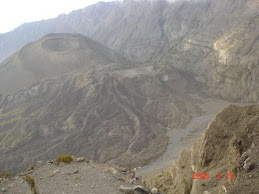
On Sunday we along with some other volunteers had a ½ way to Christmas dinner at one of their houses. Roast chicken and potatoes with salads and vegetables. Finished off with a pavalova and Christmas pudding. There were 10 of us including three volunteers from Germany. Andrea had made up paper hats for us all to wear. The previous day I was lamenting over the death of Farrah Fawcett and so my hat had Farrah4ever on it. Ramona’s hat had Birthday Girl on it. The pavalova I baked in a gas oven so it was difficult to control the heat levels. It rose up quite quickly to this flat domed shape and made a stiff thin crust on top. Then when I turned the oven off to let it slowly cool, at some point the inside collapsed down taking about half of the top crust down with it. So in appropriate Tanzania fashion the pavalova looked like an old volcano with a large deep crater inside. Just like the Ngorogoro game reserve crater.
We started planning a procedure to use Quickbooks for the new accounting system for the organisation at their Usa River headquarters. Ramona knows other similar programs quite well so she seems to be able to find her way around the software easily. The time consuming part will be to work out the opening balances on the various accounts and enter them into Quickbooks before they change again.
The baby home was given for kitset incubators to use for premature babies. They needed to be first put together so we volunteered to do that. Once the wooden sides were assembled, we wired in the electrical heating system. Then they were varnished. Finally the clear perspex covers and tops were added.
The 24th June was Ramona’s birthday. We try to spend her birthday on a mountain or a big hill somewhere every year. Since Mt Meru (4562 m) is just a couple of miles away and it is quite the big mountain, we set out to drive up to the base a bit and spend a few hours hiking up there. Marsha came with us too as she had been to that spot before and sort of knew where to go. It is not a well known path and not a tourist trail by any means. We think it is more a path the local farmers use to move up and down the mountain. The lower slopes have very fertile soil and a lot of small area crops are grown, all tilled by hand with a hoe. Once on the trails off the main tarmac road it is a winding, dirt trail up the lower slopes. We were often in quite thick bush so easy to get disorientated very quickly. Very few vehicles drive up that far we concluded There are no maps, no signs, no nothing to tell you where you are. . All you know is up and down the mountain. We got so lost up there! We ended up driving a long way in the wrong direction along this path, narrow at places, with water and mud filled ruts, half buried big rocks, a bridge made of planks thrown on some other planks to cross a small stream. Bit worried about that one. So after a while we turned back, Ramona and Marsha had to re-lay some of the planks as they had shifted from the first crossing. We followed a new trail downhill and came back on to the main tarmac road again after about ½ an hour and found ourselves about 10 miles away from where we had first started. So OK, now that we knew a little about the lay of the land, we drove back to the start point and looked for a turn me must have missed to take us up the mountain and not along it. We found it very early on and up we went. This time we picked up a local girl along the way, hoping she would tell us the right way to go. She almost did, as she thought we were giving her a ride home and we missed the last turn off again. Another local pointed it out to us, (no English spoken up there). So we parked and hiked up for an hour as by then it was getting late. Had late lunch up there and then returned. Driving down was meant to be easy as there was only one right turn we thought. But not to be, we got lost again! So for the second time that day there we were driving down a dirt tail not knowing where we were, the locals looking at us probably wondering what the mzungus were doing there again. This time we came out about 3 miles away from where we started off the tarmac road.
Last Saturday, we went into Arusha to watch, on a big screen, the All Blacks play France again in NZ. There was one French guy and 6 of us in the bar, so good for barracking against the French. Just after that game finished we heard the Wallabies were to play Italy in a test match in Melbourne. We changed bars to a restaurant and had lunch and watched that game. Then not long after that game finished, the Springboks played the Lions in a test match in Durban, so we stayed and watched that game too. It was amusing how the matches all lined up in one after another in Africa time with the games being played in the late afternoons in three different countries.
On Sunday we along with some other volunteers had a ½ way to Christmas dinner at one of their houses. Roast chicken and potatoes with salads and vegetables. Finished off with a pavalova and Christmas pudding. There were 10 of us including three volunteers from Germany. Andrea had made up paper hats for us all to wear. The previous day I was lamenting over the death of Farrah Fawcett and so my hat had Farrah4ever on it. Ramona’s hat had Birthday Girl on it. The pavalova I baked in a gas oven so it was difficult to control the heat levels. It rose up quite quickly to this flat domed shape and made a stiff thin crust on top. Then when I turned the oven off to let it slowly cool, at some point the inside collapsed down taking about half of the top crust down with it. So in appropriate Tanzania fashion the pavalova looked like an old volcano with a large deep crater inside. Just like the Ngorogoro game reserve crater.
Saturday, May 30, 2009
On Hold in Arusha
At the end of March we left Gairo to head back to Australia for two weeks. The work at Gairo had come to a stop almost as we are waiting on more pump parts to come in before we can install the remaining 14 pumps. Our worker in Gairo, Nik was going to finish off the remaining 4 pump slabs to be constructed and be ready for the arrival of the pumps. We went to Dar es Salam for a couple of days, where we got the truck serviced, caught up with Max the ADRA director there for an afternoon to debrief him on the Gairo progress, plus get some more great meals from the Pub we stay next to when in Dar.
In Australia we went to a Wedding of Matt and Lauren in Sydney. Matt worked with us in our old company EE. They had chosen a nice venue and planned a great day and a follow up BBQ for Sunday the day after. Congratulations to Matt and Lauren.
We got to spend some good time with our 2 cats in Melbourne. They were well adjusted to Sarah and Blair looking after them while we have been away and didn’t freak out too much when we came home. Sarah and Blair spoil them so much. That is because they are so cute.
We got to catch up with most of our old EE friends one night at a Pub in Port Melbourne which was very nice. Thanks to all who came.
Then it was back to Tanzania via J’burg again. Back at Arusha we are doing various jobs to help out as needed. One night we had a Pancake night. Ramona and I bought a bunch of berries, syrup and ice-cream and cooked up pancakes for about 14 people. Scrump it was. Another night Max and his family and some friends had a small bonfire out back of their house. We sat around the fire and told a few stories did some star gazing, sang a few songs. On the weekends we have been catching up with the other VSA volunteers around. Some good lodge meals, a few Sunday afternoon beers, good discussions on Africa, places to visit in Tanzania, and what is next for us all after our assignments are over. Most of the other VSA volunteers here at the moment are finishing their terms this year or early next.
We’ve taken on a big project at Adra to implement a new accounting software package and a review of their admin systems. They are switching to Linux for security and anti-virus reasons, so any new software has to run on Linux which makes it a challenge. Ramona is trialling the various packages out and noting their pros and cons. Linux is meant to be as easy as Windows but we have yet to see evidence of that. One day I got stuck for the whole day just because I couldn’t launch a file. It had to be done in terminal mode and that is so unfriendly and un-intuitive. Max’s son Brendon knows it well though so we had to wait for him to get free time to help us out.
The national power company (who is a monopoly) announced last week that they were going to start power outages as they could not meet the demand. So in addition to the power going on and off several times a day from a few minutes to hours, they now are turning the power off at about 7 pm at nights for a few hours it seems. So now our kit for walking outside at night has to include carrying a torch. I cannot imagine the loss to the country when they turn the power off, especially during the day and shut down all the businesses. Not only does the power company (govt owned) loose all the income they could have been generating, the loss of sales revenue from business shutdowns for the nation must be substantial. I’ve been reading a history book on the great scientists since the 1500s, the start of the renaissance. One thing that comes out clear is once electricity was invented and made available, the pace of modernisation of those societies was very fast. Without a reliable source of electricity it seems countries like Tanzania will always struggle. The people want it but many probably cannot afford to buy it even if it was available and the government says there is not enough money to build more capacity to generate more power. i.e. a no win situation. Without the foresight to invest in infrastructure, a country cannot move forward.
I’ve been writing a paper on and off since we have been here on some basic problems and solutions I see with Tanzania. I am sure it will win a Pulitzer prize when it is finished which it nearly is. So stay tuned. It is called Lions for Cows. Email us if you would like a copy of it sent back to you.
In Australia we went to a Wedding of Matt and Lauren in Sydney. Matt worked with us in our old company EE. They had chosen a nice venue and planned a great day and a follow up BBQ for Sunday the day after. Congratulations to Matt and Lauren.
We got to spend some good time with our 2 cats in Melbourne. They were well adjusted to Sarah and Blair looking after them while we have been away and didn’t freak out too much when we came home. Sarah and Blair spoil them so much. That is because they are so cute.
We got to catch up with most of our old EE friends one night at a Pub in Port Melbourne which was very nice. Thanks to all who came.
Then it was back to Tanzania via J’burg again. Back at Arusha we are doing various jobs to help out as needed. One night we had a Pancake night. Ramona and I bought a bunch of berries, syrup and ice-cream and cooked up pancakes for about 14 people. Scrump it was. Another night Max and his family and some friends had a small bonfire out back of their house. We sat around the fire and told a few stories did some star gazing, sang a few songs. On the weekends we have been catching up with the other VSA volunteers around. Some good lodge meals, a few Sunday afternoon beers, good discussions on Africa, places to visit in Tanzania, and what is next for us all after our assignments are over. Most of the other VSA volunteers here at the moment are finishing their terms this year or early next.
We’ve taken on a big project at Adra to implement a new accounting software package and a review of their admin systems. They are switching to Linux for security and anti-virus reasons, so any new software has to run on Linux which makes it a challenge. Ramona is trialling the various packages out and noting their pros and cons. Linux is meant to be as easy as Windows but we have yet to see evidence of that. One day I got stuck for the whole day just because I couldn’t launch a file. It had to be done in terminal mode and that is so unfriendly and un-intuitive. Max’s son Brendon knows it well though so we had to wait for him to get free time to help us out.
The national power company (who is a monopoly) announced last week that they were going to start power outages as they could not meet the demand. So in addition to the power going on and off several times a day from a few minutes to hours, they now are turning the power off at about 7 pm at nights for a few hours it seems. So now our kit for walking outside at night has to include carrying a torch. I cannot imagine the loss to the country when they turn the power off, especially during the day and shut down all the businesses. Not only does the power company (govt owned) loose all the income they could have been generating, the loss of sales revenue from business shutdowns for the nation must be substantial. I’ve been reading a history book on the great scientists since the 1500s, the start of the renaissance. One thing that comes out clear is once electricity was invented and made available, the pace of modernisation of those societies was very fast. Without a reliable source of electricity it seems countries like Tanzania will always struggle. The people want it but many probably cannot afford to buy it even if it was available and the government says there is not enough money to build more capacity to generate more power. i.e. a no win situation. Without the foresight to invest in infrastructure, a country cannot move forward.
I’ve been writing a paper on and off since we have been here on some basic problems and solutions I see with Tanzania. I am sure it will win a Pulitzer prize when it is finished which it nearly is. So stay tuned. It is called Lions for Cows. Email us if you would like a copy of it sent back to you.
Sunday, March 29, 2009
The Water Bringers
We have been told the local villagers from around the 6 villages we have been working in have given us a nick name. It is in Swahili, Wanaleta maji which means the Water Bringers. We probably have been a bit different to other people they may have seen over the years. A lot more hands on. We had gotten water in every well we drilled for them. Over the process of drilling the wells to installing the hand pumps that we have been out to each site numerous times to do something to the well, like build the slab, pump test it, bail water from it etc and each time some of the villagers had come out and seen us getting water out of these wells. So there must be a lot of local people who have seen us getting water from these wells and some of the different villagers have been talking to each other to come up with this name. Kind of Cute!
Installing the first hand pumps
Ramona and I had gone to Morogoro to buy enough parts to complete 3 of the 17 hand pumps needed. We installed these pumps in three different villages to give them a sample of what was to come. So last Sunday Ramona and I along with Nick our local helper and 3 of the local kids we have become friends with, loaded up the land cruiser and headed out to the first site. The pump sections are in 4 m lengths installed one at a time, lowering the assembly down the well 4 m further every time till the desired depth is reached. For each section, there is a stainless steel 10 mm inner sucker rod to connect up first then the outer PVC tube. It took a few trials to figure out how to do this efficiently and safely as once there were several lengths assembled it was too heavy to hold up by hand and the risk of dropping the assembly down the well was too high. The week before I had made up two sets of V blocks that would clamp around the outside of the PVC and act as stops to suspend the assembly at the top of the well so no one had to hold the weight. During assembly it became clear we needed a forked tool to hold the inner rods up above the PVC outer casing to allow the next inner rod to be connected to the lower inner rod. A trip back into Gairo to buy a piece steel and the use of a hack saw to make this tool solved the problem. After about 2 hours the first pump was installed and ready to go. I gave the handle a few pump up and downs and though I could hear water none came out. I gave it a few more with the same result. I started thinking, oh, what could be wrong? It is quite a simple set up. One of the village elders came over and we pumped a few more times and water started pouring out of the pump. Clear cool water just running out on to the pump slab we had made. The look on the villagers faces was one we’ll never forget. The word went around quickly and more and more people started coming out. Not that many but enough to make a crowd around the slab. The people were smiling, laughing and pointing at the water coming out. They quickly arranged for some buckets to put under the spigot to collect this valuable resource. Ramona said she was holding back tears from seeing the joy on these people’s faces. One mama with the usual baby on her back got on the pump and as she was pumping up and down you could see the baby’s head bobbing up and down like a ride on a bucking bronco. It made for a good video!We timed how long it took various people to fill a 20 liter ‘plastic’. A fit young male was about 1-1/2 min, an 8 yr old kid was about 2-1/2 mins and the mama with baby on back was 2 mins. This means on average it means they would pump about 600 lph while pumping.
After the first village and armed with the right tools now we went to the 2nd village to install the next pump. This pump was right beside a group of mud houses so there were plenty of people to come and see what we are doing. We had the pump installed in about 2 hours with a good sized group of watchers. Nick started pumping this pump for the first time. Just like the first one, after a few strokes, water started coming out of the spigot. More clear cool water. The people quickly saw what was happening and started bringing buckets of all colours pushing to get their bucket at the head of the queue. They all wanted a turn on the pump, talking loudly, laughing and smiling. One of the elder mamas there took charge of them and organised the empty buckets on the right and full ones on the right. We had our camera out to take pictures of different people and expressions. Once they saw this they all wanted their picture taken. Mzungu Mzungu cries were frequent to attract our attention. When you show them the picture on the camera screen, they laugh and scream and jostle around.
The third pump was not quite so dramatic. It was on a site that was out of sight of the local villagers so most of them did not know we were there. A few trickled down while we were there and got their buckets filled. One mama was on her way to the nearby water pit with green water in it when one of the guys called her over to get fresh water from the pump. This well is a Seep well, which is a name given to a well that has a low recharge rate, a lot lower than the above 600 lph. This means the people could be able to pump the well dry. We tested this out and after about 45 mins the pump stopped lifting water. We left it for 4 hours and when we came back there was plenty of more water again that had collected in the well. So these villagers may have to wait a while between pumping sessions it seems, but there will still be many buckets to pump from the well over a day.
After the first village and armed with the right tools now we went to the 2nd village to install the next pump. This pump was right beside a group of mud houses so there were plenty of people to come and see what we are doing. We had the pump installed in about 2 hours with a good sized group of watchers. Nick started pumping this pump for the first time. Just like the first one, after a few strokes, water started coming out of the spigot. More clear cool water. The people quickly saw what was happening and started bringing buckets of all colours pushing to get their bucket at the head of the queue. They all wanted a turn on the pump, talking loudly, laughing and smiling. One of the elder mamas there took charge of them and organised the empty buckets on the right and full ones on the right. We had our camera out to take pictures of different people and expressions. Once they saw this they all wanted their picture taken. Mzungu Mzungu cries were frequent to attract our attention. When you show them the picture on the camera screen, they laugh and scream and jostle around.
The third pump was not quite so dramatic. It was on a site that was out of sight of the local villagers so most of them did not know we were there. A few trickled down while we were there and got their buckets filled. One mama was on her way to the nearby water pit with green water in it when one of the guys called her over to get fresh water from the pump. This well is a Seep well, which is a name given to a well that has a low recharge rate, a lot lower than the above 600 lph. This means the people could be able to pump the well dry. We tested this out and after about 45 mins the pump stopped lifting water. We left it for 4 hours and when we came back there was plenty of more water again that had collected in the well. So these villagers may have to wait a while between pumping sessions it seems, but there will still be many buckets to pump from the well over a day.
Mikumi Wildlife Park
We are heading back to Arusha in a couple of weeks, for several months while we are waiting on pump parts to come in before we can carry on with the project. Hence we took the opportunity before leaving the area to go visit the Mikumi National park. It is straight south of us, not that far, but the dirt roads are not too good so it is best to drive east to Morogoro for 2 hours, then back south west to the park for 1-1/2 hours as that is all sealed road. The park is unique in that the sealed road actually drives right through the park from east to west and continues on to some other southern Tanzania towns. This means you can be driving along and come across a troop of baboons sitting on the road, or a herd or giraffes crossing the road. Elephants are plentiful as are impala along the road. Quite surreal. Big fines if you hit an animal through. There are speed bumps, vicious ones, all along the road so you can’t drive fast in most places anyway. We being tourists would stop to take pictures, where as the truckies and buses would get impatient with us and go around us at speed. The park on the north side of the road is about 1/3 of the total park, the other 2/3rds are to the south of the road but there is not much in the way of roads and tourist activities on that south side.The park headquarters is about ½ way along the road and then turn off to the north a few 100 m to go through their gate and access the interior of the park. It is all gravel sand roads in the park but in quite good condition. 4 WD not needed at all. You have to stay on the roads and are not allowed to get out of your car. This makes it a bit difficult to get some pictures at times. An open top vehicle would be an advantage. We just used out little Pajero. We hired a guide for $10 for the day to shows us what roads to drive on, and give us good information about the various animals.The park is quite flat with open long grassy areas and them some other places with more trees.
There are quite a few different animals to see. As well as the above are eland, warthogs, lions (we didn’t see any that day), leopards (though almost impossible to find in any park), lots of zebra and wildebeest, water buffalo, hippos, (who make the cutest deep based loud umph umph umph sound to each other), crocs, and lots of birds from small to medium size.
We stayed at a tiny hotel ( only 4 rooms) in the town of Mikumi right on the western side of the park outside the park boundary. Run by a Swiss-Tanzanian couple, great restaurant and bar. Real western food, oh Boy! There are a few safari lodges in the park where you may get big animals walking around outside your room. They are almost $500 a night however. Though very accessible, there are not many visitors to this park so you are not waiting behind other vehicles to see animals etc.
We drove around the park on Saturday and on Sunday we headed further west along the sealed road. The next big town is called Iringa and the Lonely Planet says it is a nice drive from the plains of Mikumi up a gorge 170 km to reach Iringa perched atop the hills. We didn’t have time to drive the whole way and still get back to Gairo at dusk, but drove most of it to see the scenery in the gorge. It is mostly too steep to farm so there are not many people living in that area and it is mostly forest and rocky bluffs with a decent sized river at the bottom. It was indeed a nice drive. The road even though sealed was in major need of repair. Dang!. There were so many broken down trucks or trucks in some form of accident, all the way along it. We’ll have to do it again and get all the way to Iringa next time.
There are quite a few different animals to see. As well as the above are eland, warthogs, lions (we didn’t see any that day), leopards (though almost impossible to find in any park), lots of zebra and wildebeest, water buffalo, hippos, (who make the cutest deep based loud umph umph umph sound to each other), crocs, and lots of birds from small to medium size.
We stayed at a tiny hotel ( only 4 rooms) in the town of Mikumi right on the western side of the park outside the park boundary. Run by a Swiss-Tanzanian couple, great restaurant and bar. Real western food, oh Boy! There are a few safari lodges in the park where you may get big animals walking around outside your room. They are almost $500 a night however. Though very accessible, there are not many visitors to this park so you are not waiting behind other vehicles to see animals etc.
We drove around the park on Saturday and on Sunday we headed further west along the sealed road. The next big town is called Iringa and the Lonely Planet says it is a nice drive from the plains of Mikumi up a gorge 170 km to reach Iringa perched atop the hills. We didn’t have time to drive the whole way and still get back to Gairo at dusk, but drove most of it to see the scenery in the gorge. It is mostly too steep to farm so there are not many people living in that area and it is mostly forest and rocky bluffs with a decent sized river at the bottom. It was indeed a nice drive. The road even though sealed was in major need of repair. Dang!. There were so many broken down trucks or trucks in some form of accident, all the way along it. We’ll have to do it again and get all the way to Iringa next time.
Subscribe to:
Posts (Atom)






.JPG)


.JPG)


.JPG)