Over Easter, we took a long weekend and flew down to Livingstone in southern Zambia to visit the Victoria Falls. At 1.5 km wide and 100 m high, the falls are an impressive site at any time of the year. At this time of the year, it is rainy season and the falls were in full flow. There is normally white water rafting in the canyons below the falls, but with such a high flow rate, they had cancelled that activity.
The falls are part in Zimbabwe and part in Zambia, but given the government forced decline in Zimbabwe, almost all tourists stay on the Zambian side nowadays. Zambia was a pleasant surprise, at least the small parts we saw of it. Good roads, almost every one speaks English, western clothes are common, and no power outages while we were there. Livingstone is quite the tourist area with many of the modern facilities run by South Africans. The town itself is somewhat dilapidated, but the road to the falls, 11 k away has many new hotels, shopping plazas, and restaurants catering to the more wealthy tourists. Livingston gets its name from Dr David Livingston the famous explorer back in the 1800s who bought news of Africa and its highlights to the then western world.
There are many activities set up for tourists to do and most hotels have an activities office which organise the bookings. The operators then come and pick you up from the hotel and drop you off afterwards if desired. The centre piece is of course the falls and all the different ways to see it. You can see the falls from pleasure boats from above the falls, you can fly over them in a helicopter or a microlight, walk down to the water’s edge where the water goes over the precipice. The best viewing is from the small park on the down stream side of the falls. The falls are part of the Zambezi river . The river is normally wide and gracefully flowing along. At the point of the falls however is a large deep fault that the water drops down into. From there the fault zigzags back and forth for many km downstream. All of the viewing anywhere is done from the top of the canyon, level with the top of the falls. Hence the downstream view of the falls is level with the top of the falls looking as the water falls down into the canyon. The flow rate is so high though (5 million lpm) that the thunder from the water is quite loud. There is a huge wall of mist rising out of the canyon that can be seen 30 km away. The local name for the falls translated means – the smoke that thunders. The mist rises up about 100 m above the falls then falls back to ground as rain. And rain it is! The little plateau, immediately downstream of the falls, is about 50 m from the water wall and where most of the viewing and pictures of the falls are taken. The falling mist just pelts down like a massive rain storm. No matter what you wear, you are going to get wet. Cameras and phones are going to get destroyed. Most tourists just walk in shorts and no shirt or a skimpy top, knowing they are going to get wet. One enterprising entrepreneur rents out rain jackets, but it is an exercise in futility as you are just going to get drenched. It is all quite fun to experience it. Then stand back 150 m from the falls and it is hot and dry.
On Friday night we took a river boat ride up above the falls on the African Princess, a sister boat to the African Queen. A little more luxurious than the boat used by Audrey Hepburn and Humphrey Bogart! The Zambian side of the river is another park that stretches up river a ways. People can ride elephants in the park. That didn’t appeal to us however too much.
On Saturday morning we took a helicopter ride (Flight of the Angels) over and around the falls which was a great way to see the whole geology of the area and understand why they are like they are. You can see the big hotels that Zimbabwe used to offer but now are hardly used. After that we got taken to the falls park and a guide spent a couple of hours with us showing us along the paths and telling us about the falls and their history. Yep, he too got soaked to the bone. For lunch we went to the Royal Livingstone Hotel. It is on the Zambezi River waterfront right just back from the top of the falls. A magnificent view and beautiful grounds plus a deck over the water for drinking cocktails and watching the sunset on the other side of the Zambezi, with the roar of the falls a 100m away. The wait staff are immaculately dressed, the maitre-d wearing a tux and tails. The reception staff wear the old English pith exploring helmets. Very quaint. The meals are superb and the desserts are a work of art. There are a number of shops around this hotel and another nearby that sell high end souvenirs and house decorations with an African flavour. After lunch we went back to the park at the falls for some more watching. There is a bridge over the canyon just down from the falls. The east end is Zimbabwe and the west is Zambia. We walked out on the bridge to watch the bungee jumping and gorge swings off it into the canyon.
On Sunday we went with an operator, Abseil Zambia, to one of the canyons about 3 km downstream. They had set up a series of adrenaline activities like flying foxes, gorge swings, abseiling down the cliffs there. We signed up for a couple of goes on each of the activities. The abseiling was the most moderate. It was Ramona’s first time to do this but she did well. It was 2 min to go down and then 30 mins to walk back out of the canyon. Next was the flying fox. They strapped you into a harness attached to the middle of your back. At the top the strap was attached to a pulley. The pulley then runs on a cable stretched across the canyon. When swinging you are suspended like you are flying through the air. This had a 5 m long run to the cliff edge and then you leapt off into space. While running the strap is not tight so when you get to the edge and jump off you fall for about ½ m and during that time your heart is in your mouth. Dang! Once the strap comes tight and you realise it is not going to break and plummet you to the rocks below, you find yourself hanging horizontally and flying along the cable out over the canyon. It is quite cool. On the last time I took the video camera with me to capture the flying over the precipice out into the canyon.
Next came the Gorge Swing. After having seen it earlier that morning I was quite dreading it. This is no ordinary swing! Like the flying fox it is based on a main wire stretched over the canyon. Another cable is attached at one end to a pulley rolling on the main wire. The other end of this swing cable is attached to you via a harness. The scary thing is that the swing cable does not get tight until you have fallen down into the canyon 53m. Only then does it come tight and act like a swing and you swing back and forth over the canyon. So you start off on standing on this concrete platform sticking out over the gorge. Then you jump off and literally free fall these 53m which takes about 3.5 seconds. Then the swing cable snaps tight and you swing out into the canyon. Wow, does that 3.5 secs scare the heck out of you. You see the cliff face just rushing past you so fast and your mind tells you it is all over. It was just scary how fast you are falling before the cable comes tight and takes the weight. Ramona and I did it twice as a tandem strapped to each other at the hip. Me being heavier would fall faster and Ramona would get pulled over on top of me just as the swing cable came tight. Then once the cable was tight it was a nice swing back and forth over the canyon for a few minutes till they lowered us down to the valley floor. One of the assistants took our video camera and videoed us during the event. Not a movie to be shown in public. That is some scary activity, boy!
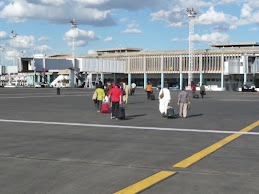
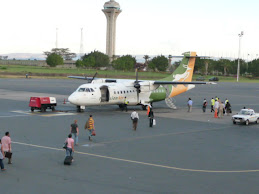
Monday had us flying back to Lusaka, the Zambian capital where we had a few hours to wait until our flight back to TZ. The taxi driver we had met on Friday was there to pick us up and take us to a shopping mall. We caught a good ol USA movie full of car chases and shoot outs, “Armored.” The taxi driver then took us back to the airport for a midnight flight back to Nairobi then Arusha.
Friday, April 9, 2010

Wednesday, April 7, 2010
Another Water Well Drilling Project, Babati
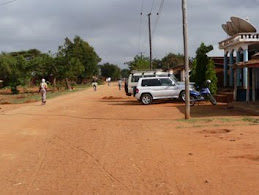
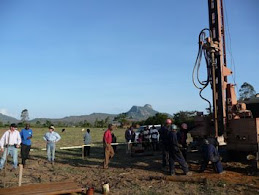
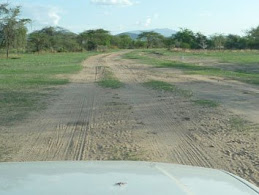
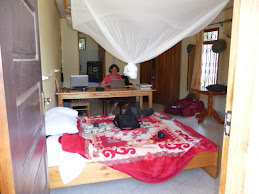
Another project is underway at an area called Babati. It started about 2 years ago and is a bit behind schedule and needs help. Babati is about a 4 hour drive west of Arusha. 2/3rds of the way is tarmac as that is the way to the game watching parks. After that, the last 60 km is on gravel road and that part takes a long time. Average speed of 25 km per hour on a lot of it. Thankfully there are some contractors from China who are in the process of getting the road ready to seal. It may be next year before it is done and should then be a boom to the Babati economy as it will then be a lot more accessible to Arusha and the tourist industry. Babati is close to the rift valley's huge escarpment so some of the scenery is quite picturesque. At the moment there is very little in the way of any facilities to attract tourists to the region. The roads are poor. It gets a lot of rain in the wet season and agriculture is full swing out there. Part of the project is to install a number of new water wells and rehabilitate older water points that no longer work. We have come out here to help with getting 20 new wells drilled. We spent part of January and February writing and sending out bid documents for water well location surveying and their drilling, then reviewing the offers. In mid March we drove out here in the Adra Land Cruiser and our little Pajero. The roads out here are way too rough for the Pajero and the Land Cruiser is the ideal vehicle to use for day to day work. Babati is a small town at a T intersection of 3 roads. The road to the east is to Arusha, to the west is the road to Dadoma and to the North is the road to Singida. The arms of the T are tarmac sealed for about 1 km in each of the three directions then it is rough gravel/dirt road. The town has the normal collection of guest houses, hardware stores, salons, a couple of banks, some bars, stationery stores and petrol stations. No western restaurants at all. We are staying at a small 9 room guest house called the White Rose and given where we are, it is quite nice. Some days it reminds us of Fawlty Towers with the one guy who runs everything, Michael, getting called in all different directions at once. The only other place to eat in town for Mzungus is Pik-n-Pay where a bowl of rice and beans is $2 and coke is 40 cents. You can only eat so many bowls of rice and beans over a couple of weeks, before your appetite starts to fade away.
The first weekend we got there, there was no work to do so we went for a hike up onto a hill behind the town. All dirt roads and crossing through peoples yards to get to the hill. It provided a nice overlook of the town and the lake on the nw end of the town.
The drilling contractor Chuck we are using is from Oregon and has many years of drilling experience. He was with us in Gairo last year too. Chuck is an easy going retiree. Chuck already had his survey crew here by the time we arrived in Babati and the drilling crew arrived a couple of days later. The survey equipment was new to us. It measures electrical resistivity in the ground along a 600 m long line with electrodes spaced every 10 m apart. The signal can penetrate down to approx 100 m in depth. It shows the results on a coloured contour 2D plot. Low resistivity being clays, medium resistivity being sands and gravels (where the water would be located if it was there at all) and bed rock is high resistivity. It takes about a day to do one survey by the time we drive there on these roads, do the survey and get back, so it can be a slow process. Babati is a hilly region so it is unlikely that there will not be a place to drill somewhere along the 600 m line. However in many cases we struggle to find a place 600 m long to lay out the cables. The little valleys may not be that wide and at this time of year, any flat land is covered by 5 ft high maize plants. While the maize is ok to survey in, we cannot get the drill rig in there as the ground is too soft and the truck would get stuck. It is currently the rainy season where it rains on and off almost every day so any tilled ground is very soft. We could have waited till the end of the rainy season to drill but the project is rapidly running out of time as it is and delaying another couple of months would have been a bigger problem. The local government policy is to locate water wells 100 m away from any building or road, which is proving quite difficult to do in this terrain. We keep questioning what constitutes a road in this country? Is a dirt path in a maize field a road? No one can answer of course. To us putting a well somewhat close to a road makes more sense as it is then accessible to the well users, rather than make them carry their buckets across the country side. We had the same consensus in Gairo last year so not sure why it is different here. Also here there are more politics of a lot of other parties wanting to be involved and have their say which makes it slow to work out here.
Due to the number of officials watching us on site, we are being extra careful to document the progress and well performance. A hand pump can only pump about 500 liters per hour. We are endeavouring to drill to depths where we can get at least 2000 liters per hour. This may not be possible for all locations and so we spend quite a amount of time measuring the flow rate of water coming from the well over a few hours to verify it is suitable for a hand pump. To measure the flow rate, we use the rig compressor to air lift all the water from out of the hole. Once out of the hole the water falls on the ground and runs off to the low point. By making small earth works from the drill cuttings, we control where the water runs off to and can direct it to flow through a V-notch weir we made in town one day or if the ground is soft enough to dig a big enough hole in to hold a 20 l bucket down in it, then we flow the water through a 150 mm diameter PVC pipe and measure how long it takes to flow 20 liters of water into a 20 liter bucket held under the pipe outlet. From that we compute the flow per hour.
After 2 weeks we had only drilled 4 bores and had broken two down hole hammers and gotten stuck many times. Getting parts for the hammers proved tricky and they have to be ordered from India so this has bought the drilling to a halt for at least two weeks. That coupled with the problems the rain was causing of getting these heavy trucks stuck every time we got off a road means we are on hold for at least two weeks so we have come back to Arusha. The little town of Babati is on a slight downhill W-E slope. At the top of the town just north is a lake covering a couple of 100 acres. With all the rain, the level has risen to where the normal overflow outlet cannot handle the flow so the lake is spilling its water over the edge and into the main street of the town. On either side of the main street are 1 m deep and 1 m wide open drains to channel water off. The one on the lake side runs at full flow the whole time we have been there. The one on the other side of the street is blocked in a culvert and no one bothers to clean it out, so it is empty and can’t help with any run off. If more water flows from the lake than the first drain can handle, then the water flows across the main street in many places and at quite a few cm deep. It makes it hard for the locals who have to walk everywhere to walk around through this water and all the mud it creates along the side of the street and into any of the shops. About ½ of the area for the bus station is underwater that people have to walk through. The kids love these drains flowing with all the water. They take a mosquito net (probably from some well wishing donor) and since the nets are a nice conical shape it makes an ideal net to hold the opening across the width of the drain and catch fish in that have been caught up in the lake overflow. Some of them spend all day in the drain fishing, even on school days. Go figure!
The first weekend we got there, there was no work to do so we went for a hike up onto a hill behind the town. All dirt roads and crossing through peoples yards to get to the hill. It provided a nice overlook of the town and the lake on the nw end of the town.
The drilling contractor Chuck we are using is from Oregon and has many years of drilling experience. He was with us in Gairo last year too. Chuck is an easy going retiree. Chuck already had his survey crew here by the time we arrived in Babati and the drilling crew arrived a couple of days later. The survey equipment was new to us. It measures electrical resistivity in the ground along a 600 m long line with electrodes spaced every 10 m apart. The signal can penetrate down to approx 100 m in depth. It shows the results on a coloured contour 2D plot. Low resistivity being clays, medium resistivity being sands and gravels (where the water would be located if it was there at all) and bed rock is high resistivity. It takes about a day to do one survey by the time we drive there on these roads, do the survey and get back, so it can be a slow process. Babati is a hilly region so it is unlikely that there will not be a place to drill somewhere along the 600 m line. However in many cases we struggle to find a place 600 m long to lay out the cables. The little valleys may not be that wide and at this time of year, any flat land is covered by 5 ft high maize plants. While the maize is ok to survey in, we cannot get the drill rig in there as the ground is too soft and the truck would get stuck. It is currently the rainy season where it rains on and off almost every day so any tilled ground is very soft. We could have waited till the end of the rainy season to drill but the project is rapidly running out of time as it is and delaying another couple of months would have been a bigger problem. The local government policy is to locate water wells 100 m away from any building or road, which is proving quite difficult to do in this terrain. We keep questioning what constitutes a road in this country? Is a dirt path in a maize field a road? No one can answer of course. To us putting a well somewhat close to a road makes more sense as it is then accessible to the well users, rather than make them carry their buckets across the country side. We had the same consensus in Gairo last year so not sure why it is different here. Also here there are more politics of a lot of other parties wanting to be involved and have their say which makes it slow to work out here.
Due to the number of officials watching us on site, we are being extra careful to document the progress and well performance. A hand pump can only pump about 500 liters per hour. We are endeavouring to drill to depths where we can get at least 2000 liters per hour. This may not be possible for all locations and so we spend quite a amount of time measuring the flow rate of water coming from the well over a few hours to verify it is suitable for a hand pump. To measure the flow rate, we use the rig compressor to air lift all the water from out of the hole. Once out of the hole the water falls on the ground and runs off to the low point. By making small earth works from the drill cuttings, we control where the water runs off to and can direct it to flow through a V-notch weir we made in town one day or if the ground is soft enough to dig a big enough hole in to hold a 20 l bucket down in it, then we flow the water through a 150 mm diameter PVC pipe and measure how long it takes to flow 20 liters of water into a 20 liter bucket held under the pipe outlet. From that we compute the flow per hour.
After 2 weeks we had only drilled 4 bores and had broken two down hole hammers and gotten stuck many times. Getting parts for the hammers proved tricky and they have to be ordered from India so this has bought the drilling to a halt for at least two weeks. That coupled with the problems the rain was causing of getting these heavy trucks stuck every time we got off a road means we are on hold for at least two weeks so we have come back to Arusha. The little town of Babati is on a slight downhill W-E slope. At the top of the town just north is a lake covering a couple of 100 acres. With all the rain, the level has risen to where the normal overflow outlet cannot handle the flow so the lake is spilling its water over the edge and into the main street of the town. On either side of the main street are 1 m deep and 1 m wide open drains to channel water off. The one on the lake side runs at full flow the whole time we have been there. The one on the other side of the street is blocked in a culvert and no one bothers to clean it out, so it is empty and can’t help with any run off. If more water flows from the lake than the first drain can handle, then the water flows across the main street in many places and at quite a few cm deep. It makes it hard for the locals who have to walk everywhere to walk around through this water and all the mud it creates along the side of the street and into any of the shops. About ½ of the area for the bus station is underwater that people have to walk through. The kids love these drains flowing with all the water. They take a mosquito net (probably from some well wishing donor) and since the nets are a nice conical shape it makes an ideal net to hold the opening across the width of the drain and catch fish in that have been caught up in the lake overflow. Some of them spend all day in the drain fishing, even on school days. Go figure!
Loss of a Sister, Elinor
During February we made an unscheduled return trip to Louisiana to visit with Ramona’s terminally ill sister Elinor as her condition was deteriorating. We spent two weeks there visiting with her and helping their mother out with caring for Elinor. Sadly just after we returned to Tanzania, Elinor passed away, we are comforted to know she is no longer in pain. This was very hard on us even though all the family knew it was coming. Not being able to go to the funeral was disappointing for us; however, we shared in Elinor’s memorial service from here. Another memorial service for Elinor will also be held in Austin Texas, where the three of us lived for many years, and made many friends. It will be held in September this year, and we will be attending. Elinor will always be greatly missed by Ross, Ramona and her family. She’ll continue to live in our hearts.
Tuesday, January 12, 2010
Pangani - A New Year's Beach Getaway
5 of us volunteers from Adra climbed into our little Pajero and headed east to the Indian ocean for a few days over New Years eve. It is meant to be a 6 hour drive, but the drive between Arusha and Moshi which is a smaller town 60 km due east took about 2 hours. There were police out in front of every little village stopping virtually every one. There are many villages between Arusha and Moshi. This is their high season and they can supplement their salaries with a lot by stopping and finding things wrong with people’s vehicles then taking unreceipted fines!. We got stopped for not having a copy of the vehicle registration on us. Then we got stopped for not having a ‘fire sticker’. Not having heard of this we ask what is a fire sticker. He points us to a guy sitting in a fire truck donated by the Japanese. Apparently every vehicle is meant to pass a ‘fire certification’ then gets a sticker to put on the windshield. Naturally they don’t have any stickers left but we still have to pay, then with his written temporary receipt, then drive into the government office in Moshi to get an official government receipt to say we had paid for this inspection. No one ever inspected the truck. The government guy in Moshi had no stickers either, he said try again late January. While in Moshi we filled up with fuel and when I opened the petrol cap a wasp flew out and stung my hand. Ouch, it swelled up a bit for three days. That was a lot of drama in 2 hours!
Anyway we get to Pangani with no further incident at about 3 pm after the last 42 km along a dirt road. We checked into the Tinga-Tinga lodge. It is quite basic and rustic on a cliff top overlooking the blue ocean. Very pretty. It is a lot hotter there than Arusha so we quickly head down the steps to the ocean. The water is very warm and fantastic for swimming and just floating about it. Very nice. Dinner is in an open air restaurant with seafood dishes. The full moon is shining on the water in between the palm trees. The next day was New Years eve. We drove to Pangani town itself and walked along the dilapidated water front. It used to be a popular trading center in the early days but has been neglected for about 100 years and so most of the early European style stone buildings are in various stages of decay and collapse. They still have some nostalgic charm. The town got its infamous name from the Swahili verb ‘panga’ which is to arrange. It was a slave trading town and the selling broker would call out ‘Panga Panga’ to get the slaves arranged in a line to be sold. Over the years it became Pangani. New Years eve was with about 30 guests at the lodge, all international travellers of some sort. The lodge put on a special buffet. After eating we moved just outside on to the grass on the cliff top where it was a little cooler. The evening passed quickly with talking to other people, where they came from, why they were in Tanzania. At midnight, out came the champagne for a New Years toast.
New Years day after a morning swim, the lodge manager said he would take us for a walk up the beach to a special beach where there were giant Clam fossils in the sandy cliffs. We were into this with excitement. Taking our swimming gear and water bottle we headed off north around the next bay. Tucked in behind some mangroves was this sandy beach with a 7 m sandy cliff above it. Sure enough there were many of these fossils. Millions of years old they had been calcified and were very heavy. Some almost complete shells and some broken ones. Some protruding just a little suggestively bit from the sand ,others lying exposed on the sand. With storms and high tides they get reburied and others get exposed all the time he said. These shells are about 2 ft (0.6 m) across. Ramona had her picture taken sitting in one. On the way back instead of walking back around the bay I swam across it while Ramona carried our gear. The water is so warm and inviting. The next day after a morning swim we left with fond memories of this secluded beach town.
Anyway we get to Pangani with no further incident at about 3 pm after the last 42 km along a dirt road. We checked into the Tinga-Tinga lodge. It is quite basic and rustic on a cliff top overlooking the blue ocean. Very pretty. It is a lot hotter there than Arusha so we quickly head down the steps to the ocean. The water is very warm and fantastic for swimming and just floating about it. Very nice. Dinner is in an open air restaurant with seafood dishes. The full moon is shining on the water in between the palm trees. The next day was New Years eve. We drove to Pangani town itself and walked along the dilapidated water front. It used to be a popular trading center in the early days but has been neglected for about 100 years and so most of the early European style stone buildings are in various stages of decay and collapse. They still have some nostalgic charm. The town got its infamous name from the Swahili verb ‘panga’ which is to arrange. It was a slave trading town and the selling broker would call out ‘Panga Panga’ to get the slaves arranged in a line to be sold. Over the years it became Pangani. New Years eve was with about 30 guests at the lodge, all international travellers of some sort. The lodge put on a special buffet. After eating we moved just outside on to the grass on the cliff top where it was a little cooler. The evening passed quickly with talking to other people, where they came from, why they were in Tanzania. At midnight, out came the champagne for a New Years toast.
New Years day after a morning swim, the lodge manager said he would take us for a walk up the beach to a special beach where there were giant Clam fossils in the sandy cliffs. We were into this with excitement. Taking our swimming gear and water bottle we headed off north around the next bay. Tucked in behind some mangroves was this sandy beach with a 7 m sandy cliff above it. Sure enough there were many of these fossils. Millions of years old they had been calcified and were very heavy. Some almost complete shells and some broken ones. Some protruding just a little suggestively bit from the sand ,others lying exposed on the sand. With storms and high tides they get reburied and others get exposed all the time he said. These shells are about 2 ft (0.6 m) across. Ramona had her picture taken sitting in one. On the way back instead of walking back around the bay I swam across it while Ramona carried our gear. The water is so warm and inviting. The next day after a morning swim we left with fond memories of this secluded beach town.
Monday, January 11, 2010
Serengeti Park is Amazing
Serengeti is Maasai for Endless Plains. Tucked in behind the Ngorogoro group of extinct volcanoes, the Ngorogoro Conservation Area abuts against the eastern side of the Serengeti. From there and to a long way west are these vast grassy plains that seem to stretch forever. The difference between the Conservation area and the Serengeti is striking. In the Conservation area the Maasai shepherds are allowed to graze their herds of cows and goats. There the pastures are very short and bare in places. In the Serengeti no domestic grazing is allowed. The grassy plains are thick rich grass. The official entrance is about 20 km inside the park set in a big rock Kopje. Once past that, you drop down to the plains proper and the incredibility of 100,000’s of animals becomes very apparent. Zebras and Wildebeests grazing as far as the eye can see. From the very close that move off the gravel road as the vehicle travels by to just black specs on the far horizon. It is simply staggering to see that much wildlife before your eyes. We’d barely gone 1 km down the road towards the park center and came across a small pride of lions lying out open on the grass. They have few predators if any and so can virtually do what they like when they like. With this much food around for them they do not have to go very far. They barely blinked as we stopped to film them. We camped the first night (Christmas eve)at a public campground near the center of the park. Here there are quite a few trees and bushy with rocky out crops. The guide and cook that came with us from SOK Adventure Travel we had arranged the trip with, looked after putting up the tent and preparing food. We ate in style, huge plate of food with a bottle of wine, though it was shared with a number of large moths who liked our lanterns in the dark. It was a 5:15am start Christmas day as we were going to hot air ballooning at dawn. A driver came to pick us up in the dark (and rain now). The roads that were not gravel had turned into this black super sticky mud and our Landcruiser got stuck. We had to wait for another to come and tow us out. Once at the balloon launch site we waited for the rain to go off, but alas it never did so the balloon was cancelled for that day. They were fully booked for the next days so we thought we had lost the opportunity. Back to the camp ground and the rain stopped. Another huge plate of food and then off for a game spotting drive around the center of the park. There are roads crisscrossing about every ½-1 km so you can get close to most locations. Throughout the grassy plains are small streams with long grass and trees growing along them. This is where the predators seem to spend their time in waiting for the grazing animals to wander close. We spotted another pride of lions not far from our camp. They had killed a zebra the day before and were now standing (actually lying sprawled out)guard over it to keep the vultures from stealing their next two days food. A couple of km further on we saw a group of parked Landcruisers bumper to bumper with tourists leaning out the top, their camera’s with super lens on them pointing in the same direction to some trees. Pulling up in the cluster we spot a cheetah slinking through the long grass. Out come our cameras too. After a while of the traffic jam of too many Landcruisers around we moved further south to a region with less traffic. Another Cheetah was spotted close to our road. She was walking along parallel to the road. Taking her time and stopping every now and then to look around over her shoulder. What a magnificent cat. Unlike the solid muscled lions, the cheetah is almost a cross with a gray hound dog. They are long and sleek, with a large chest and a very small rear with a long thick tail. Purely built for speed. We watched and followed her for quite a while. For a while two jackles (like a fox) came along and joined her. They would follow her about 5 m behind. She didn’t seem to mind too much bet every few mins she would turn around and appear to tell them to get lost. They would run off about 50 m, then when she resumed her course they would come back to behind her again like little kittens. So cute. Leaving the Cheetah and off to some more rock kopjes with trees on to see if there are more cats in them. They use these big rocks as look out points over the plains. Seeing nothing there we moved east over to area where these was a small stream running along. There were quite a few trees with long grass along the depression. There were two other Landcruisers there watching something. We finally saw their target, a Leopard sneaking through the grass making a path along the stream depression. We drove further along crossed over the stream and came back on the other side where the leopard now was. We were about 50 m away from her. She crept along a distance more, then found a tree with a big broken branch sticking out of it a couple of meters above the ground. She leapt up on this near horizontal branch and sat surveying the area. She was paying no attention to any of us at all. The leopard is spotted like a cheetah but has the frame of a small female lion. This was our first leopard we had seen. Beautiful creature and a mighty hunter we are told.
Back to the camp, past the lions guarding their dead zebra, and yet another huge plate of food for a late lunch. We told Amani the cook to cook on smaller plates, he just laughed and trotted off to bring a plate of fruit for dessert. The rain had come back as a drizzle as we started off on a Christmas evening game drive. Past the lions again now with more vultures around sitting in the trees getting soaked with rain. We pass a heard of Cape Buffalo in some trees. These are one of the big five. A massive bull like animal with a dangerous set of curved horns ready to tear into you if they can get you. They are very aggressive we hear and always look at you with an angry appearance. They are impressive to see nevertheless. By now it is getting dark. Our guide and driver Emanuel gets a call from his brother who also is in the park. He is a guide for another group. His Landcruiser has broken down not far from us. We drive over and tow him back to the lodge where his clients are staying then return to our camp in the dark. Amani delivers another huge plate of food with a bottle of red this time. Emanuel with some prompting gives a good lesson in Kiswahili.
5:50 am and our alarm goes off on Boxing day. Emanuel wants us in the Landcruiser by 6 am for an early morning game drive. Back past the lions still hording their food supply from hungry eyes. We drive north stopping for a troop of baboons on the road doing their early morning grooming. Their hand actions are so human like it is fascinating to watch. Then it is on to the Hippo pool. With the recent rain the river was in flood. The hippo pool is at a right angle bend in the river, the water is quite deep and swift with a stillish area at the back of the bend. There are dozens of hippos in there. Snorting and fighting with each other. Quite a racket at times. The size of these massive animals is quite apparent at that close range. Back to the campsite, for yes you guessed it, another huge breakfast. Onto an afternoon game drive, this time down in the south of the park. On the way we got to see several groups of lion sitting in trees and watching what was going on out on the grassy plains. Though not unheard of, lions are not normally in trees. They are a bit awkward crawling around the trees. One tree had two near full grown males in it. Their heads with the mane are so big. Another had two big lioness and two ½ grown cubs all in it. We passed a small water hole with hyenas sitting in the water to cool off. They just peered at us as we pulled up to watch. Quite odd. Further south was away from the grassy plains with significantly less animals we learned after a while. We came across a group of people sitting on top of the Landcruiser drinking wine pointing at a lioness a couple of 100 m away sitting on a rock kopje eyeing them. Their Landcruiser was stuck in a 7 m wide river crossing with steep muddy banks on each side. The water was up to the bottom of the doors. They had been there 3 hours without seeing any one in sight so were glad to see us. Without a long tow rope we could not pull them out and they didn’t appear to want to get dirty to dig themselves out. We tried a piece of short rope our driver had, that only ended up getting us stuck in their too. Not good, late afternoon, no one knows where we are, two stuck Landcruisers and a lion watching it all. We had prepayed several $100 to stay in a game lodge that night and the thought of losing that luxury and having to stay in a Landcruiser in the middle of a muddy water pool was not appealing. With cutting branches with a very blunt machete and digging away the banks we got our Landcruiser out finally. We took their driver with us and dropped him off with a ranger to go back and tow them out properly. We got back to the lodge after dark and in the rain. On the way the Balloon people called our driver and said they had 2 free spots for the next morning and we could go.Another 5:30 am rise to get to the balloon site. It was overcast, no rain and with a gentle breeze to the south. Just before the balloon was ready, the basket was on its side and we were instructed to enter the basket and sit in our seats that were now on their side. Once every one was in their seat, the pilot ignited the burners and filled the balloon with hot air, the balloon picked itself up vertical and the basket rolled the right way up and we were off. The other balloons were a few minutes behind us. We would float anywhere from 10 to 300 m above the ground. There were herds of wildebeest and zebra below us with the occasional hyena skulking across the plain. The balloon burners make a bit of noise when they are on and the wildebeest being very nervous will run off quite readily. The flight was meant to be for an hour but the wind carried us south where there were fewer roads for the support vehicles to meet us, so we stayed aloft as long as we could to get closer to a road, by the time we hit the ground the butane tanks were completely empty and the balloon could travel no more. A great experience with breathtaking views. After that they took us to a nearby set of trees where they had laid out a champagne breakfast for us all. After breakfast it was back to Arusha.
Oldavai Gorge Stop Over
This is in the Ngorogoro Conservation area. This is the site where Mary and Louis Leakey made their famous early man discoveries back in the 1950s. There is a small museum with fossil and stone tool relics. You have lunch on top of the cliff under a shaded roof overlooking the gorge that drops off right below and stretches out for a km of so. A guide gives a lecture on the history of the site while you eat lunch. Their bones were 1.6 million years old. A few km away Mary discovered some human foot prints over a 25 m stretch from two adults and a child (they called 'Lucy'). These prints were 3.6 m years old, but no fossils at that site. At the Oldavai site there are excavations every year by international scholars and finds are common we were told. It may have been an old lake which is why there is so much evidence of previous habitation there.
Back to the camp, past the lions guarding their dead zebra, and yet another huge plate of food for a late lunch. We told Amani the cook to cook on smaller plates, he just laughed and trotted off to bring a plate of fruit for dessert. The rain had come back as a drizzle as we started off on a Christmas evening game drive. Past the lions again now with more vultures around sitting in the trees getting soaked with rain. We pass a heard of Cape Buffalo in some trees. These are one of the big five. A massive bull like animal with a dangerous set of curved horns ready to tear into you if they can get you. They are very aggressive we hear and always look at you with an angry appearance. They are impressive to see nevertheless. By now it is getting dark. Our guide and driver Emanuel gets a call from his brother who also is in the park. He is a guide for another group. His Landcruiser has broken down not far from us. We drive over and tow him back to the lodge where his clients are staying then return to our camp in the dark. Amani delivers another huge plate of food with a bottle of red this time. Emanuel with some prompting gives a good lesson in Kiswahili.
5:50 am and our alarm goes off on Boxing day. Emanuel wants us in the Landcruiser by 6 am for an early morning game drive. Back past the lions still hording their food supply from hungry eyes. We drive north stopping for a troop of baboons on the road doing their early morning grooming. Their hand actions are so human like it is fascinating to watch. Then it is on to the Hippo pool. With the recent rain the river was in flood. The hippo pool is at a right angle bend in the river, the water is quite deep and swift with a stillish area at the back of the bend. There are dozens of hippos in there. Snorting and fighting with each other. Quite a racket at times. The size of these massive animals is quite apparent at that close range. Back to the campsite, for yes you guessed it, another huge breakfast. Onto an afternoon game drive, this time down in the south of the park. On the way we got to see several groups of lion sitting in trees and watching what was going on out on the grassy plains. Though not unheard of, lions are not normally in trees. They are a bit awkward crawling around the trees. One tree had two near full grown males in it. Their heads with the mane are so big. Another had two big lioness and two ½ grown cubs all in it. We passed a small water hole with hyenas sitting in the water to cool off. They just peered at us as we pulled up to watch. Quite odd. Further south was away from the grassy plains with significantly less animals we learned after a while. We came across a group of people sitting on top of the Landcruiser drinking wine pointing at a lioness a couple of 100 m away sitting on a rock kopje eyeing them. Their Landcruiser was stuck in a 7 m wide river crossing with steep muddy banks on each side. The water was up to the bottom of the doors. They had been there 3 hours without seeing any one in sight so were glad to see us. Without a long tow rope we could not pull them out and they didn’t appear to want to get dirty to dig themselves out. We tried a piece of short rope our driver had, that only ended up getting us stuck in their too. Not good, late afternoon, no one knows where we are, two stuck Landcruisers and a lion watching it all. We had prepayed several $100 to stay in a game lodge that night and the thought of losing that luxury and having to stay in a Landcruiser in the middle of a muddy water pool was not appealing. With cutting branches with a very blunt machete and digging away the banks we got our Landcruiser out finally. We took their driver with us and dropped him off with a ranger to go back and tow them out properly. We got back to the lodge after dark and in the rain. On the way the Balloon people called our driver and said they had 2 free spots for the next morning and we could go.Another 5:30 am rise to get to the balloon site. It was overcast, no rain and with a gentle breeze to the south. Just before the balloon was ready, the basket was on its side and we were instructed to enter the basket and sit in our seats that were now on their side. Once every one was in their seat, the pilot ignited the burners and filled the balloon with hot air, the balloon picked itself up vertical and the basket rolled the right way up and we were off. The other balloons were a few minutes behind us. We would float anywhere from 10 to 300 m above the ground. There were herds of wildebeest and zebra below us with the occasional hyena skulking across the plain. The balloon burners make a bit of noise when they are on and the wildebeest being very nervous will run off quite readily. The flight was meant to be for an hour but the wind carried us south where there were fewer roads for the support vehicles to meet us, so we stayed aloft as long as we could to get closer to a road, by the time we hit the ground the butane tanks were completely empty and the balloon could travel no more. A great experience with breathtaking views. After that they took us to a nearby set of trees where they had laid out a champagne breakfast for us all. After breakfast it was back to Arusha.
Oldavai Gorge Stop Over
This is in the Ngorogoro Conservation area. This is the site where Mary and Louis Leakey made their famous early man discoveries back in the 1950s. There is a small museum with fossil and stone tool relics. You have lunch on top of the cliff under a shaded roof overlooking the gorge that drops off right below and stretches out for a km of so. A guide gives a lecture on the history of the site while you eat lunch. Their bones were 1.6 million years old. A few km away Mary discovered some human foot prints over a 25 m stretch from two adults and a child (they called 'Lucy'). These prints were 3.6 m years old, but no fossils at that site. At the Oldavai site there are excavations every year by international scholars and finds are common we were told. It may have been an old lake which is why there is so much evidence of previous habitation there.
Sunday, December 13, 2009
The Passing of Boots
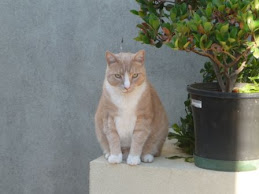
This last week we got a call from our house sitters in Melbourne that our dear little cat Boots had had a stroke and couldn’t walk. The vet said there was nothing they could do for him and so we had to let him go. He was 13. We are feeling so sad. Ever since we have been married we have virtually had our cats Kimba and Boots. He was such a great little friend. He would follow us around the house or yard just to be with us and talk with us. He had a great sense of humour and loved to play. Every day when we used to come home from work in Melbourne the cats would meet us with great affection. They could brighten any day. Boots would sprawl out on the bed every night forcing us into uncomfortable contorted positions to make room for him, but we never complained, it was so nice to have him there like that. We were truly blessed to share his life and he will be missed greatly. He was our little boy.
Saturday, December 12, 2009
Lake Eyasi – A Cultural Visit
This last weekend we went on another camping trip with almost the same people we went to Lake Natron with. Alan and Andrea are due to leave Tanzania after 3 years here, so it was our last adventure with them. They go back to Aust & New Zealand. We had become good friends with them so it is sad to see them go. On this trip we did not take our little Pajero and instead rode in the Landrover of Alan and Andrea. They had said the road would be rougher than the Lake Natron road which was quite bad in places. No tarseal of course. This Lake is out west in the same direction as Natron sort of, but further west. We left Friday night after work and drove to a town called Karatu about 2 hours out of Arusha. That is the end of the sealed road. We spent the night in quite a modern camp ground. We walked to the Happy Days restaurant next door and had burgers and cold drinks out on a wooden deck. Back at the camp ground we went into the lodge bar where they were playing Country and Western music. We gave Andrea some Two-Stepping lessons.
The next morning it was west off the tarseal towards Lake Eyasi. Another 2 hr drive along well defined but crude dirt track. At often times the local kids would see the trucks coming and run to the edge of the track and call out for candy or pens (of all things). The camp round was a nice long grassy grove amongst some Acacia and other tall trees with black seed pods about the size of a tennis ball. It was on the side of the lake bed but like Natron, the lake was well down and it was about 2 km out to the water’s edge over a lifeless and very hot mud flat. It is an alkaline lake so there is very little life around there. No fish in the lake at all, hence no feeding birds either naturally. We never actually saw the water. Back at the tent sites, Alan pointed out the seed pods made good Platunc balls. We spent several hours playing a game of that. During which Bruce discovered he had a puncture in his van tyre. Bruce wanted to fix the puncture there as there are little facilities in the local Eyasi village. It took a while to get the tyre off the rim and it was hot. Warm cokes (no cold drinks available) were going down a plenty. The camp ground has a reasonable shower and toilets (holes in the ground surrounded by a bunch of sticks tied together). So a shower afterwards was welcome. Just before dusk we went up to a cliff top that gave impressive over views of the sunset over the lake and surrounding area. The sunset was a classic picturesque African rich deep orange sunset. Magnificent. We even were fortunate to see a striped Hyena slinking through the bush below. Alan had seen it on his last trip to Eyasi a year ago too he said.
The reason we went to Eyasi is that there are some isolated tribal people who live there in their old tribal ways. They are ‘off the grid’ so to say and pretty much keep to their old ways and not intermingle with the regular people. This is a very dry arid area making quite a primitive lifestyle. Too tough for us. Two tribes we wanted to see were the Hadzabe and Datoga. So on Sunday morning the local guide we had hired the day before showed up with three Hadzabe men. They were to show us where to find a Hadzabe village. The Hadzabe are hunters, not farmers. So they are always on the move after animals to hunt. They have no electricity in their villages, no water supply, no schools, no permanent houses, only basic structures made from sticks that looks like a stick igloo. If they kill a big animal like a Water Buffalo and the carcass is too heavy to bring back to the village, they just move the village to the carcass.
These three Hadzabe wanted us to take them to a special big rock where a particular plant grew. The plant they used to extract a poison from to put on the tips of their arrows. They would boil down some of the branches of this plant to make this poison for their arrows. Apparently this poison could drop a buffalo in about 30 mins. Powerful stuff. They normally took three days to walk to this rock so being driven in a landrover was a treat for them. One of them had a stiff leg whose knee no longer worked. A few years ago he had gotten into a tussle with a water buffalo they had shot with a poisoned arrow and thought was dead. However when they approached it, it turned out to be a different buffalo and was angry about being woken up so took to this guy galling his leg badly. The three Hadzabe with us were not used to vehicles so wanted to ride on the roof rack on top instead of getting inside the vehicle. Made for a good picture. We drove to this rock along the eastern side of the lake not along any road we could see. However when we got there a few Tanzanian locals came out at the sight of 6 mzungus and wanted to charge us a visiting fee. Even though we were just there to allow the Hadzabe to collect their plant clippings, they still said the mungus had to pay first. So we left, we are not into paying bribes. We drive a few more miles to the village cultural center where we could pay an official entrance fee for their area. These fees then should go to the village development rather than to someone’s pocket. But the office was unmanned and no one could find anyone to come and open it. So we left there too.
On to a Hadzabe village. It was a small village of only about 20 people, 4-5 families. ½ dozen young kids and some teenagers with parents. Dressed in loose skins. They let us shoot their bows for a while. They could hit a 6” target at about 25 m no problem at all. After 3 goes I actually hit the target. However I could only pull the bows back about ½ what they did and they were all shorter than me. So my arrow would have had no penetrating power. Some of the people with us bought a bow and a set of arrows as souvenirs.
After that we went to a Datoga village. These people are quite different. More sophisticated than the Hadzabe. They wear nicely tailored clothes from skins. Their houses are permanent mud brick houses. They perform a small amount of industry with the smeltering of metals to make arrow heads, that they sell to the Hadzabe, or make bracelets or other jewellery that the women then sell to tourists like us we presume. They had a crude set of bellows made to make their fires hot enough to melt brass (old padlocks) and bronze or soften steel. They managed to sell a few arrow heads and bracelets to our group. They grew some crops and showed Ramona and Andrea how to grind the maize into a powder. Very nice and friendly people.
The next day as we were packing up to return to Arusha, a couple who had been in the camp ground too, came and asked us for a ride back to town if we had room. They were on their honeymoon travelling around Northern Tanzania. He was Scottish and she was German. An interesting couple. Patrick worked for the Red Cross and had just finished 5 years in Afghanistan. He had some good tales to tell. We met up with them two nights later to go to dinner in Arusha to hear more of their work and travels. Their next assignment was in Chad. A different career path to most people.
The next morning it was west off the tarseal towards Lake Eyasi. Another 2 hr drive along well defined but crude dirt track. At often times the local kids would see the trucks coming and run to the edge of the track and call out for candy or pens (of all things). The camp round was a nice long grassy grove amongst some Acacia and other tall trees with black seed pods about the size of a tennis ball. It was on the side of the lake bed but like Natron, the lake was well down and it was about 2 km out to the water’s edge over a lifeless and very hot mud flat. It is an alkaline lake so there is very little life around there. No fish in the lake at all, hence no feeding birds either naturally. We never actually saw the water. Back at the tent sites, Alan pointed out the seed pods made good Platunc balls. We spent several hours playing a game of that. During which Bruce discovered he had a puncture in his van tyre. Bruce wanted to fix the puncture there as there are little facilities in the local Eyasi village. It took a while to get the tyre off the rim and it was hot. Warm cokes (no cold drinks available) were going down a plenty. The camp ground has a reasonable shower and toilets (holes in the ground surrounded by a bunch of sticks tied together). So a shower afterwards was welcome. Just before dusk we went up to a cliff top that gave impressive over views of the sunset over the lake and surrounding area. The sunset was a classic picturesque African rich deep orange sunset. Magnificent. We even were fortunate to see a striped Hyena slinking through the bush below. Alan had seen it on his last trip to Eyasi a year ago too he said.
The reason we went to Eyasi is that there are some isolated tribal people who live there in their old tribal ways. They are ‘off the grid’ so to say and pretty much keep to their old ways and not intermingle with the regular people. This is a very dry arid area making quite a primitive lifestyle. Too tough for us. Two tribes we wanted to see were the Hadzabe and Datoga. So on Sunday morning the local guide we had hired the day before showed up with three Hadzabe men. They were to show us where to find a Hadzabe village. The Hadzabe are hunters, not farmers. So they are always on the move after animals to hunt. They have no electricity in their villages, no water supply, no schools, no permanent houses, only basic structures made from sticks that looks like a stick igloo. If they kill a big animal like a Water Buffalo and the carcass is too heavy to bring back to the village, they just move the village to the carcass.
These three Hadzabe wanted us to take them to a special big rock where a particular plant grew. The plant they used to extract a poison from to put on the tips of their arrows. They would boil down some of the branches of this plant to make this poison for their arrows. Apparently this poison could drop a buffalo in about 30 mins. Powerful stuff. They normally took three days to walk to this rock so being driven in a landrover was a treat for them. One of them had a stiff leg whose knee no longer worked. A few years ago he had gotten into a tussle with a water buffalo they had shot with a poisoned arrow and thought was dead. However when they approached it, it turned out to be a different buffalo and was angry about being woken up so took to this guy galling his leg badly. The three Hadzabe with us were not used to vehicles so wanted to ride on the roof rack on top instead of getting inside the vehicle. Made for a good picture. We drove to this rock along the eastern side of the lake not along any road we could see. However when we got there a few Tanzanian locals came out at the sight of 6 mzungus and wanted to charge us a visiting fee. Even though we were just there to allow the Hadzabe to collect their plant clippings, they still said the mungus had to pay first. So we left, we are not into paying bribes. We drive a few more miles to the village cultural center where we could pay an official entrance fee for their area. These fees then should go to the village development rather than to someone’s pocket. But the office was unmanned and no one could find anyone to come and open it. So we left there too.
On to a Hadzabe village. It was a small village of only about 20 people, 4-5 families. ½ dozen young kids and some teenagers with parents. Dressed in loose skins. They let us shoot their bows for a while. They could hit a 6” target at about 25 m no problem at all. After 3 goes I actually hit the target. However I could only pull the bows back about ½ what they did and they were all shorter than me. So my arrow would have had no penetrating power. Some of the people with us bought a bow and a set of arrows as souvenirs.
After that we went to a Datoga village. These people are quite different. More sophisticated than the Hadzabe. They wear nicely tailored clothes from skins. Their houses are permanent mud brick houses. They perform a small amount of industry with the smeltering of metals to make arrow heads, that they sell to the Hadzabe, or make bracelets or other jewellery that the women then sell to tourists like us we presume. They had a crude set of bellows made to make their fires hot enough to melt brass (old padlocks) and bronze or soften steel. They managed to sell a few arrow heads and bracelets to our group. They grew some crops and showed Ramona and Andrea how to grind the maize into a powder. Very nice and friendly people.
The next day as we were packing up to return to Arusha, a couple who had been in the camp ground too, came and asked us for a ride back to town if we had room. They were on their honeymoon travelling around Northern Tanzania. He was Scottish and she was German. An interesting couple. Patrick worked for the Red Cross and had just finished 5 years in Afghanistan. He had some good tales to tell. We met up with them two nights later to go to dinner in Arusha to hear more of their work and travels. Their next assignment was in Chad. A different career path to most people.
Subscribe to:
Posts (Atom)






.JPG)


.JPG)


.JPG)